Entrez votre terme de recherche ci-dessus.

When you or your aging loved one decides to age in place, creating a safe and comfortable home is essential. As seniors age, their mobility decreases, and there is a higher risk of falling. The home must have home aging in place modifications to help prevent injuries. Here is a list of six simple yet effective home modifications.

Installing Grab Bars or Hand Rails

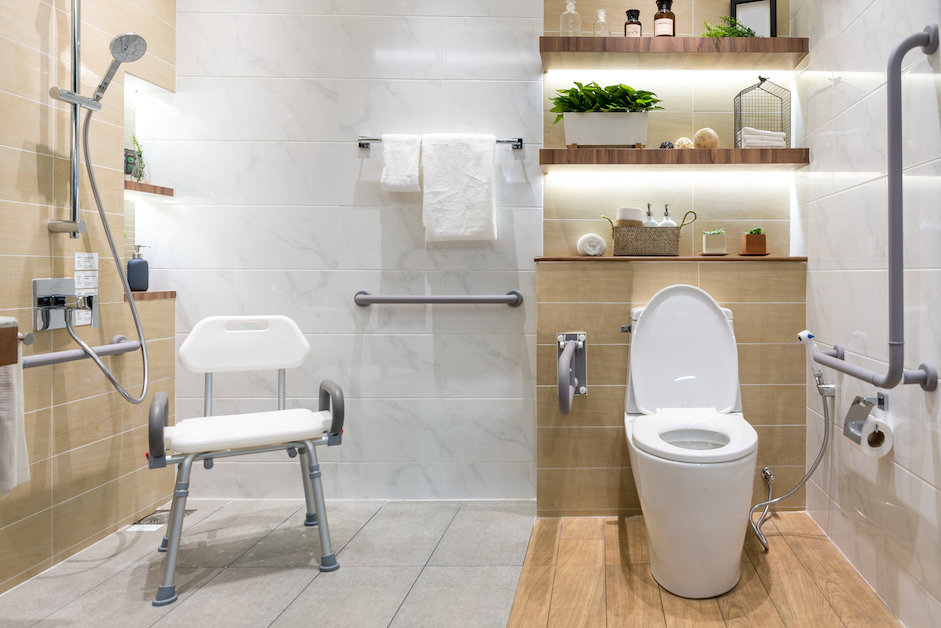
Installing Barres d'appui or railings in high-risk slippery areas, like the bathroom, can provide better support. Grab bars are typically installed near the shower or tub area and near the toilet. However, grab bars or railings can also be installed along hallways and staircases. These home modifications can give seniors more support maneuvering around the home.  

Add Slip Resistant Mats to Tubs and Floors 

In addition to grab bars, adding slip resistant mats or even slip resistant stickers, depending on mobility, to tubs and bathroom floors can help prevent falling. This can be the simplest yet also efficient way to prevent falling.

Quick Tub Conversions

Quick tub conversions turn your existing bathtub into a step-in shower while still maintaining a fully functional bathtub. Stepping in and out of the bathtub can be a slip hazard for older adults.  

Threshold Ramps

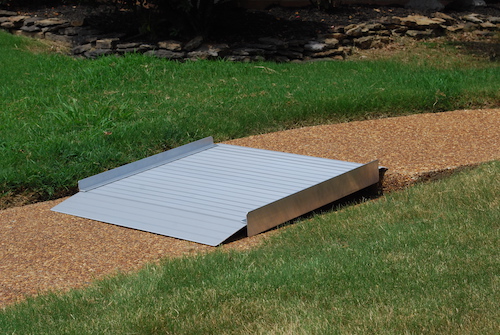
A threshold ramp is a simple and safe way to help wheelchairs or other mobility devices to cross over rough surfaces. The slightly-inclined platforms makes it easy to cross over raised landings, doorways, or curbs.

Replace the Hardware on Door Handles and Cabinets  

Replacing round doorknobs with lever-style handles can help people with arthritis or grip issues easily open doors. Likewise, swapping out round kitchen cabinet doorknobs with lever-style handles or bar handles makes accessing kitchen items a breeze. Small knobs, like those commonly found on kitchen cabinets, can be hard to grasp for people that struggle with dexterity.  

Add More Light Fixtures 

There are many ways to bring more light into the home. You can put nightlights in the hallway, tap-lights under cabinets, or lamps on tables. This will aid your loved ones in seeing where they are going, which can help prevent any trips or falls. 

At Next Day Access, we offer solutions for home modifications. Our goal is to provide various solutions to help prepare a home for aging in place. Some of the additional services we provide include product installation services (for big or small jobs), in-home safety consultations, rental, and rent-to-own programs for non-custom products, as well as financing options. If you or a loved one is in need of our services or products, contact us today. 
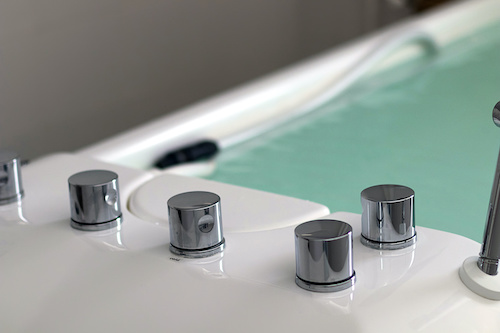
Whether you’re an older adult living at home or have a physical disability that limits your mobility, bathroom safety should be a top priority. According to the National Council on Aging, falling is the result of more than three million emergency department visits every year. What may be even more surprising about that statistic is most of the falls are preventable. Improving bathroom safety should begin with evaluating your current bathtub or shower and deciding whether a walk-in tub or shower could be beneficial. Here are the main factors to consider between the two.

Benefits of a Walk-In Tub

Older adults striving for independent living can benefit from a walk-in tub in many ways. The anti-slip surface provides better traction than traditional bathtubs or showers to help prevent slipping and falling. The lower threshold also means you don’t have to lift your feet as high to enter, so it’s not as difficult to maintain your balance. A walk-in tub is shaped differently from traditional tubs since they are taller but not as wide. This means you can more easily submerge your body in the water and allow the hydrotherapy jets to target your aches and pain points. 

Walk-In Showers Have Some Limitations

If you’re used to primarily taking a shower instead of a bath, then you may be considering upgrading to a walk-in shower. These can be more spacious than traditional shower-tub combinations, but the problem is they don’t allow for sitting and taking a bath if you want to. For a senior living at home, having this option is important so you can sit and relax after a long day, or if you get to a point where standing for several minutes becomes more difficult. 

Your Current and Future Needs When Deciding

Some of the things to consider when deciding whether a walk-in tub or a walk-in shower is right for you include:

  • Any mobility limitations you have
  • Whether you would benefit from hydrotherapy jets to target pain points
  • Possible slip hazards
  • Whether you enjoy sitting and relaxing occasionally

It’s essential to think about these factors for your current situation and what you may want in the future. A walk-in tub or a walk-in shower is a significant investment, so it’s important to get what you need for the long-term since the decision is difficult to reverse once installed. A walk-in tub is usually the popular choice for a senior living at home. It is easily accessible and suitable for aging in place without risking safety as much.

Next Day Access strives to help seniors with their independent living efforts. Walk-in tubs and walk-in showers are popular upgrades to bathrooms, but you have to think closely about which one is most ideal for you. Most seniors opt for a walk-in tub, and it’s easy to see why with all of the luxury features they have available. Safety is always the number one concern for a senior living at home, and a walk-in tub can enhance it. If you’re thinking about upgrading your bathroom, Nous contacter, and we would be thrilled to provide you with a free home assessment and help you learn about the options available to you.

Those who find themselves caring for a loved one often realize the difficulty it can be to help them access doorways and entrances. There are different types of wheelchair ramps suitable for use in a home setting.  Here is a look at some of the available options.

Aluminum Ramp

A popular material for ramps allowing access to a home is aluminum. These usually come in modules to be fit together. These modules work for most homes. You can also order a customized ramp if there are issues getting into the home. Aluminum wheelchair ramps are strong but lighter than other ramp materials which makes them ideal for moving around if needed. They also have a good strength-to-weight ratio so they are durable and safe.

Threshold Ramps

A threshold ramp, as the name implies, is designed to be used in a single doorway or opening in the home. It’s designed for an inside doorway, and one with a short rise. Even a seemingly small rise of 1.5” can be difficult when trying to get a wheelchair through the door. These come in a standard size and offer a safe incline for a wheelchair user to get up and down the ramp. Extra-wide threshold ramps are also available for larger entryways.

Portable Ramp

Portable ramps come in a variety of materials and sizes. The least expensive and lightest is made of aluminum. Portable options are available in different lengths and folding configurations to suit the need. They are designed to go along with you in a vehicle and use whenever, wherever they are needed. Whether at home or away, a portable ramp allows access to uneven surfaces like stairs or raised surfaces. The ramp is simply placed over the obstacle. 

The single-fold ramp is designed to be folded easily and carried to the location where it is needed. It can be installed in just a few minutes and taken down quickly when done. Multi-fold portable ramps extend farther than the single-fold ramp. They can be folded multiple times so it becomes a small pack that is easily portable. The longer length is beneficial when covering a longer distance, or a taller obstacle needing more length to cover the additional height.

Interested in getting a wheelchair ramp for your home? Nous contacter at Next Day Access and let us help you make your house more accessible for you and your loved ones.

Mobility is the most common disability among older Americans. So it’s no wonder that everyday tasks can present new and challenging difficulties. This becomes increasingly true for those who choose to age in place. More than one in three seniors over the age of 65 fall each year and 80 percent of those falls occur in the bathroom. Accès le lendemain wants to make sure you live in a home without barriers. This includes making sure you have a quality product that increases your safety while at home.

  1. Shower and Tub Safety

According to the CDC, over 1.5 million aging adults seek emergency care every year for fall-related injuries. Showers are one of the most at-risk areas to experience such an injury due to the slippery surfaces that come with water. There are a few steps you can take to help prevent slips and falls. A walk-in shower is an easy way to either take your mobility chair into the shower or avoid losing your balance by stepping over the high edge of a tub. Walk-in tubs provide the same security of not having to make a huge step in but allow you the relaxation of soaking in a tub.

  1. Adjusting Problem Areas

To guarantee safety in and out of the bathtub or shower stall, install reachable Barres d'appui by the bathtub and shower. This should be specialty-designed items that will support weight, as opposed to a towel rack or bar, which can cause further injury if used as a grab bar. One more thing to not forget, make sure to address toilet safety. This problematic area accounts for 14 percent of falls. For even more ease in the bathroom, Next Day Access recommends a Bio Bidet. By offering both comfort and the functionality of a heavy-duty commode, the Bio Bidet offers a cleansing method that sets it apart from the competition.

  1. Keeping it Clean

Since bathrooms set you up for falls, don’t leave things to chance. Make sure all spills are immediately wiped up and the bathroom floor is not slick from residue. Additionally, don’t let décor stand in your way. Clear away any unnecessary items so that there is plenty of space to move around. Also make sure that any rugs or bath mats are tied securely to the floor to avoid a tripping or fall hazard. For even more safety, cover sharp edges of counters, cabinets and faucets with towels while the bathroom is in use.

Although bathrooms can be a huge safety hazard if you aren’t careful, these tips and products can help keep you or your loved ones safe and in their own home. To learn more about home safety and how you can make your home more accessible, contact the team at Next Day Access today.

It is common to develop limited mobility when aging. It’s no wonder everyday tasks can present new challenges; this becomes increasingly true for those who choose to age in place. Limited mobility in older adults can cause falling. One in three older adults age 65 and older falls each year, and eighty percent occur in the bathroom. Accès le lendemain wants to make sure you or a loved one can live in your home without barriers. Here are some preventative measures to increase bathroom safety in the home.

Shower and Tub Safety

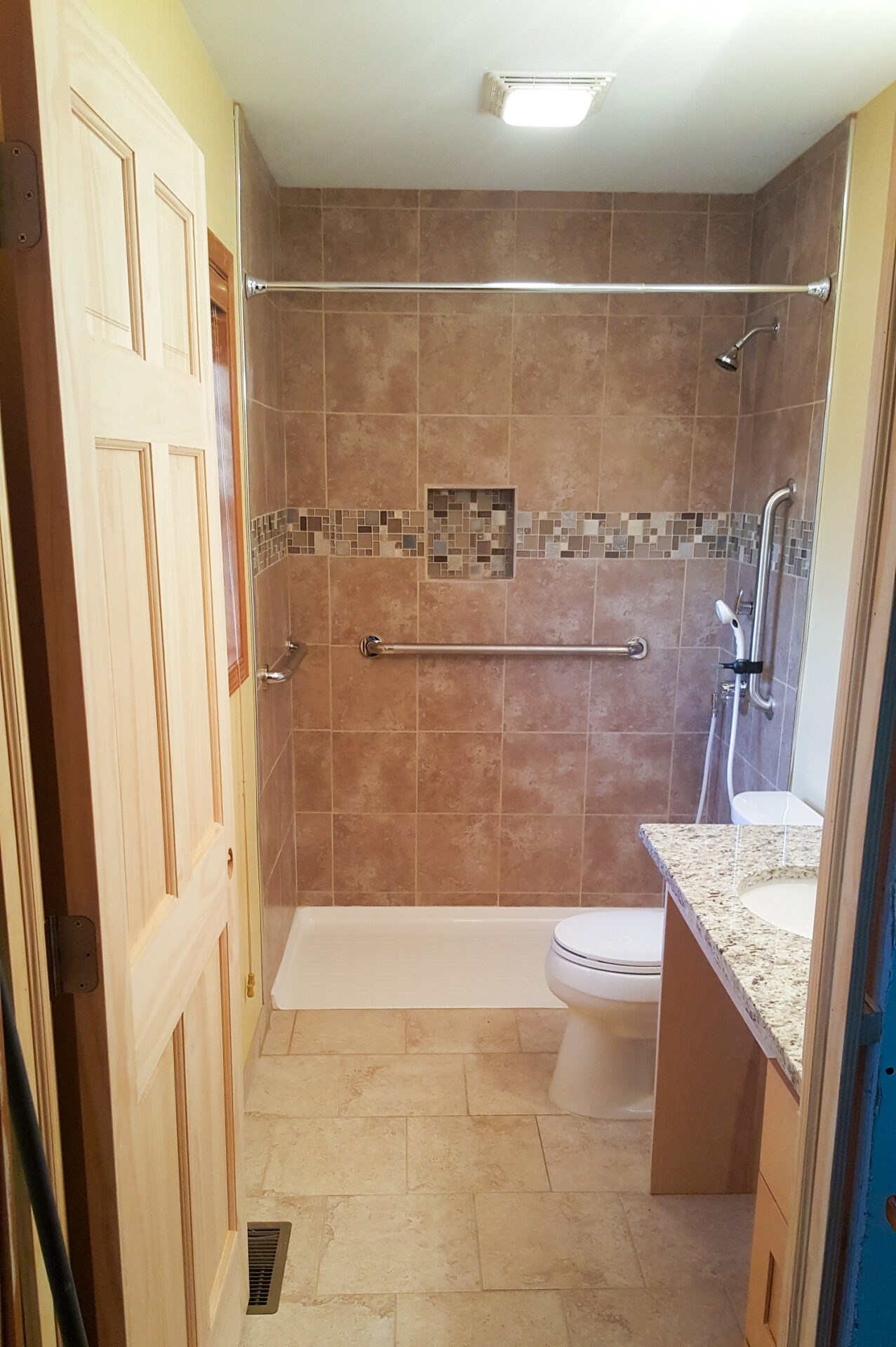
According to the CDC, 3 million aging adults seek emergency care every year for fall-related injuries. Showers are one of the most at-risk areas to experience an injury due to the slippery surfaces that come with water. There are a few steps you can take to help prevent slips and falls and increase bathroom safety. A curbless shower is an easy way to either take your mobility device into the shower or avoid losing your balance by stepping over the high edge of a tub. Walk-in tubs also provide the same security of not having to take a huge step but allow you the relaxation of soaking in a tub.

Adjusting Problem Areas

To guarantee safety in and out of the bathtub or shower stall, install reachable Barres d'appui by the bathtub and shower. This should be specialty-designed items that will support weight, as opposed to a towel rack or bar, which can cause further injury if used as a grab bar. One more thing to not forget, make sure to address toilet safety. This problematic area accounts for 14 percent of falls. For even more ease in the bathroom, Next Day Access recommends a Bio Bidet. By offering both comfort and the functionality of a heavy-duty commode, the Bio Bidet offers a cleansing method that sets it apart from the competition.

Keeping It Clean

Since bathrooms set you up for falls, don’t leave things to chance. Make sure all spills are immediately wiped up and the bathroom floor is not slick from residue. Additionally, don’t let décor stand in your way. Clear away any unnecessary items so that there is plenty of space to move around. Also make sure that any rugs or bath mats are tied securely to the floor to avoid a tripping or fall hazard. For even more safety, cover sharp edges of counters, cabinets and faucets with towels while the bathroom is in use.

Although bathrooms can be a huge safety hazard if you aren’t careful, these tips and products can help keep you or your loved ones safe and in their own home. To learn more about home safety and how you can make your home more accessible, contact the team at Next Day Access today.

tips to fund home modification

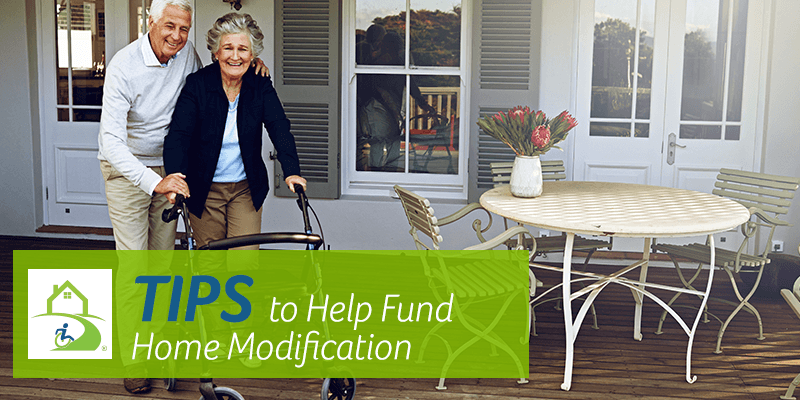
It’s no secret home modification can come with a hefty price tag. And receiving funding to help with home modification costs can be a difficult task. To assist, we’ve come up with a few solutions to help reduce cost as you look to modify your home.

Insurance Coverage

The first thing that comes to mind as a funding option is your insurance provider. You should reach out to them to understand your terms of coverage and policy.

Medicaid offers a Home and Community Based Services waiver. Through this, home modification costs are sometimes considered and reimbursed.

Medicare currently does not pay for home modifications. They do sometimes assist with durable medical equipment for the home. If a doctor prescribes equipment as medically necessary, there’s potential to have Medicare cover the expense.

Tax Deductions

You may be able to deduct certain equipment and home modifications as medical expenses. As long as your medical expenses exceed 7.5 percent (10 percent if you’re under 65) of your income, you can deduct this for tax purposes. Like Medicare, a note from your doctor stating the modifications was medically necessary can help secure the tax deduction.

Grants

There are several local, national, government and private grants you can apply for. There are specific grants for veterans, residents of rural areas, and those who are looking to be self-sufficient but aren’t classified as a low-income household. We encourage you to reach out to your medical provider to see if they know of any grants.

Long-Term Care Policy

A long-term care policy could help cover some or all of the home modifications. Work with your policy provider to understand what is and isn’t covered. Also, clarify how using the policy will impact your terms later on.

If you have questions about home modification, Nous contacter today. To learn more how we can assist you in making your home safe aging find a location near you!

As the number of those seeking to age in their own home grows, homes are going to have to meet needs that maybe weren’t anticipated when purchased. With almost two-thirds of falls each year occurring in the home, it’s important to make some changes to enhance the safety of a home. If you or a loved one falls into the group of wanting to age in place, here are some tips to prepare your home.

Bathrooms

Out of all the falls that occur for those over 65, 80 percent of them happen in the bathroom. With a few adjustments, you or a loved one doesn’t have to be a part of the 80 percent.

    1. For additional support add Barres d'appui in the bathtub, shower and by the toilet.
    2. Install slip resistant mats inside and outside showers and tubs.
    3. Place products in easy to reach areas.

Floors

In 2002, 1.6 million people were treated for serious falls. Most of the time tripping hazards are overlooked but with a few adjustments, these risks can be mitigated.

  1. Rearrange furniture to make clear paths.
  2. Remove throw rugs or fasten them to the ground to keep from slipping.
  3. Make sure objects like shoes, blankets, and toys have places to be put up or stored.
  4. Wrap cords so they’re not in a walking path.

Stairs

Stairs can be tricky even for the soundest footed. A few quick and easy repairs can help prevent falls and slips.

  1. Fix loose steps and handrails
  2. Add a light above the stairs, with switches at the top and bottom of the stairs.
  3. If climbing stairs isn’t a possibility, consider a stair lift or residential elevator.

Kitchen

The kitchen can be a dangerous place no matter who’s in it. As we age, our ability to quickly respond diminishes so taking the correct precautions can help reduce the number of incidents in the kitchen.

  1. Move things from higher shelves and cabinets to lower shelves, cabinets and countertops.
  2. Equip appliances with automatic shut-offs and check ventilation is properly working.
  3. Replace glass dishes with plastic or unbreakable ones.

Bedrooms

Sometimes the bedroom can be overlooked when making a home safer. We suggest making the following adjustments.

  1. Place light features and switches so they’re easy to reach from the bed.
  2. Add night-lights and keep walkways clear for a maneuverable path to the bed.

The Center for Disease Control says that 30 to 50 percent of falls can be prevented with a few home modifications. Making a few adjustments and running through this checklist can help get on the right path to a safer home. If you’re needing any assistance in the home modification process, Nous contacter today.

Avis des clients

FrançaisEspañolEnglish