A walk-in tub can be a smart investment for anyone with mobility challenges. Since these tubs eliminate the need to step over an edge, they’re particularly ideal for individuals with restricted lower-body movement.
But is a walk-in tub the right choice for you? In this article, we’ll run you through the benefits of a walk-in tub so you can decide whether this popular accessibility product fits your needs.
What Is a Walk-In Tub?
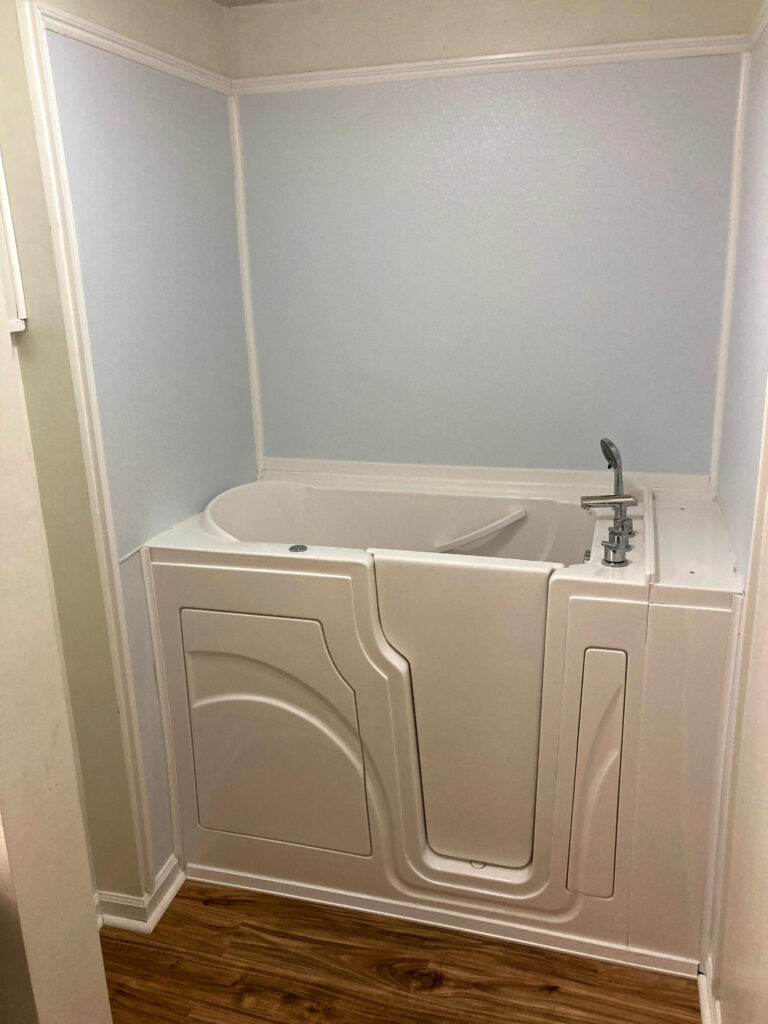
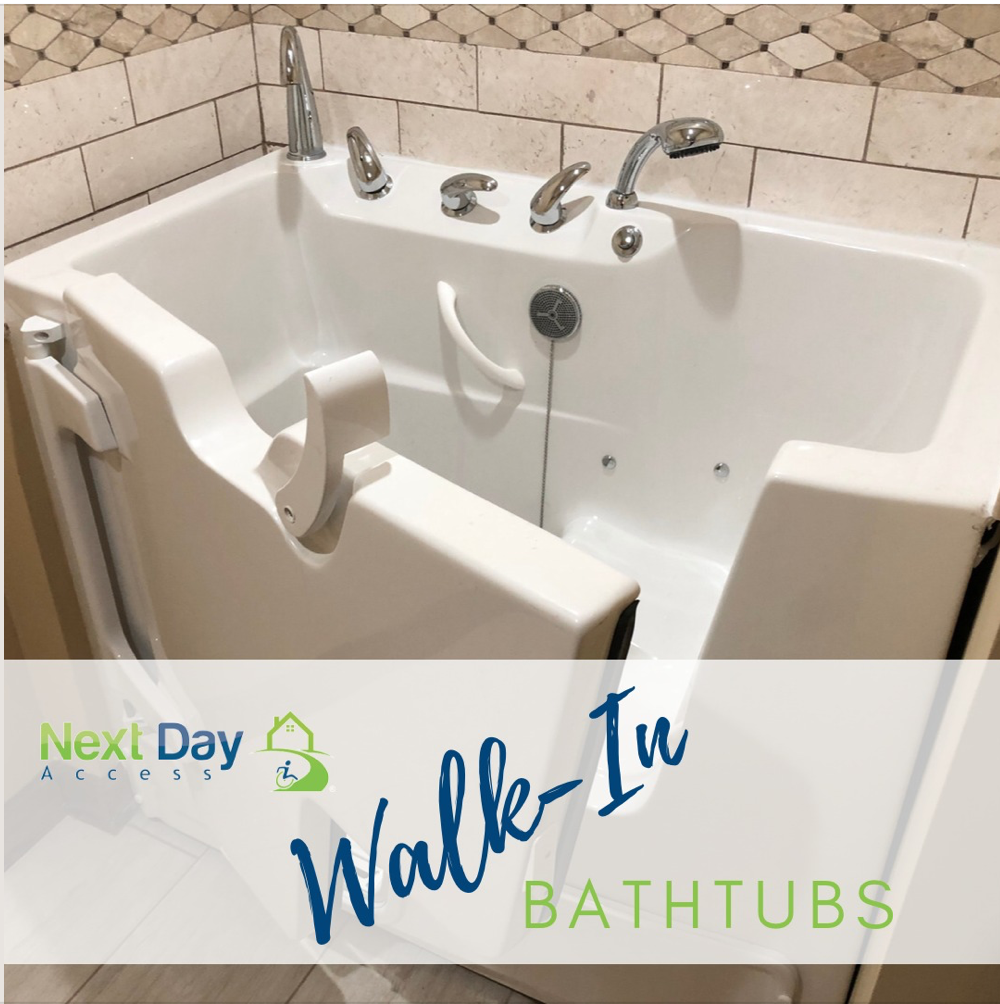
A walk-in tub features a watertight door that allows users to more easily get in and out of the tub. Instead of stepping over the edge, you simply open the door and step through.
Because walk-in tubs are focused on accessibility, they often include or are paired with additional Produits de salle de bain like non-slip flooring, safety poles, and shower seats. Some walk-in tubs even come with therapeutic features (which we’ll explore below).
Benefits of Walk-In Tubs
Walk-in tub benefits are plentiful, but here are our top three:
Fall Prevention & Safety
Walk-in tubs are extremely effective at mitigating falls and ensuring overall bathroom safety. Because you don’t have to change your center of balance to step over the tub’s edge, you greatly reduce the risk of losing balance and falling. When paired with other safety features like safety poles, walk-in tubs can provide even more security.
Therapeutic and Health Benefits
If you’re already overhauling your tub, you might want to consider upgrading to a model that offers features like hydrotherapy jets that create a gentle massaging experience. Once your walk-in tub door has been installed, you’ll have an easy way to enjoy a therapeutic bath right in the comfort of your home.
Increased Independence
If you struggle with normal tubs, you can likely use a walk-in tub without any assistance. Typically, the bathroom is an area where maintaining independence is tricky, but a walk-in tub can often remedy that issue. This can make a huge difference in your day-to-day life – and it results in a better bathing experience.
Walk-In Tub Considerations
So are walk-in tubs worth it? They often are, but before you make the investment, there are a few things you should be aware of.
Professional Installation & Consultation
For safety reasons, you should consult an expert accessibility provider before purchasing a walk-in tub. A qualified provider like Next Day Access will perform an on-site assessment, provide you with tub options and prices, and work with you to decide which products and features are best for your mobility needs.
Warranties & Service
Another reason to partner with an accessibility provider is to ensure your products come with warranties and ongoing service. Read more about our 3-year warranty.
Use of Walk-In Tubs
It’s critical to thoroughly evaluate your mobility needs before investing in a walk-in tub. Your accessibility provider can help you determine if a walk-in tub is best for you, if you need supplemental products, or if something like an adapted shower would fit your needs.
Find the Right Walk-In Tub Solution with Next Day Access
Wondering if you could benefit from a walk-in tub? Your local Next Day Access team can help you make the decision, provide you with pricing and financing options, and so much more. Find a location near you to get started!
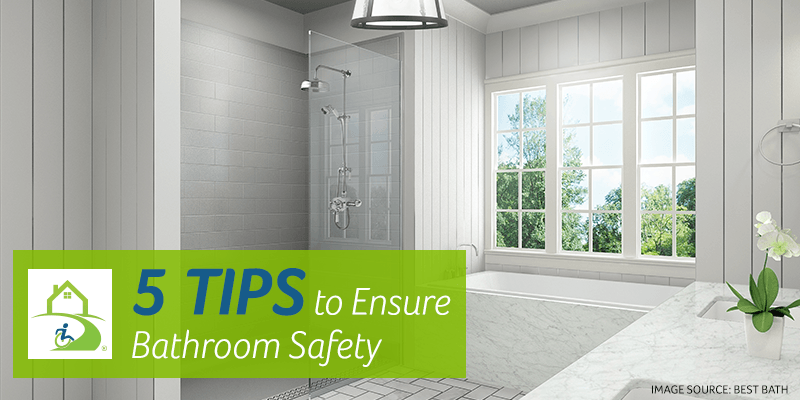
Bathrooms are well-known for posing hazards to seniors. With already slippery tiles that become even slicker when wet, bathrooms are high-risk areas for falls and other injuries. While it’s fairly straightforward to increase bathroom safety, you have to know where to focus, and that’s where Next Day Access can help.
Why Bathroom Safety is a Top Priority for Seniors
Bathrooms are extremely functional, but they’re not always designed for safety. Most bathrooms are composed of hard surfaces that turn into skating rinks when wet, metal attachments with sharp edges, and tight spaces that restrict movement. These conditions are especially dangerous for older adults with mobility challenges — according to the CDC, falls are the #1 cause of injury for adults 65 and older.
However, it’s easy to install bathroom safety products for seniors that help reduce the risk of injury and make the bathroom a safer place to be. Here are five simple tips for improving bathroom safety for seniors:
Tip 1: Install Grab Bars and Safety Poles for Stability
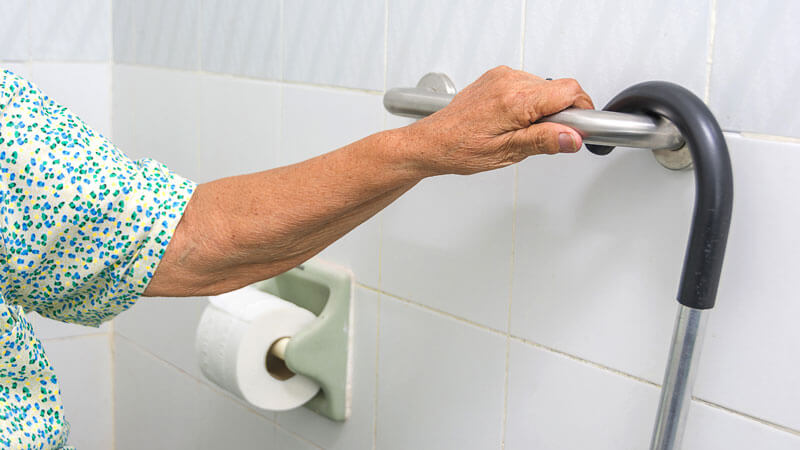
Grab bars and safety poles can dramatically improve bathroom safety for seniors. A grab bar can play different roles, but it’s most commonly used as a toilet safety rail to help users sit down and stand up more easily. By contrast, a safety pole is typically used to aid in getting in and out of bathtubs. Together, grab bars and safety poles can provide support and stability, making bathroom navigation much safer.
Tip 2: Upgrade the Tub and Shower Area
Since the bathtub/shower area gets the wettest, it can often be the most hazardous. Thankfully, there are many ways you can modify this area for safety. Here’s a closer look at some common tub and shower modifications:
Shower seats provide extra stability and safety when showering.
Douches portatives can be beneficial for seniors who use wheelchairs or other mobility equipment.
Tip 3: Consider Non-Slip Surfaces
Installing slip-resistant flooring is another way to enhance bathroom safety for seniors. In some cases, having a bathroom mat or two might suffice. For seniors with more pronounced mobility challenges, it can be better to fully replace tile flooring with non-slip materials.
Tip 4: Improve Lighting
Bathroom lighting needs to hit a sweet spot. Lighting that’s too dim can obscure a user’s vision, but lighting that’s too bright can overwhelm and also create vision problems and even dizziness. Opt for balanced lighting, and consider utilizing nightlights and/or motion-activated lights.
Tip 5: Hire a Professional Installer
Installing bathroom modifications for maximum security and user safety can be challenging, which is why hiring a professional installer is so helpful. A pro team will not only install modifications but also help you understand how to properly use them.
Get Expert Advice on Bathroom Safety for Seniors
Your bathroom should be a place of comfort and security, not risk. Our high-quality bathroom safety products for seniors can help. We’ll connect you with the right products for your needs and install each one to give you the peace of mind you deserve. Find a Next Day Access location near you or contact us today to get started!
As a veteran, you’ve sacrificed so much to ensure the safety of your fellow citizens – and now, as you’re aging at home, it’s critical to ensure your own safety. Adaptive home modifications can help you maintain your independence, so it’s important to understand what your options are. The mobility modifications that will benefit you depend on your unique situation, so our accessibility experts have put together this guide to help you determine which ones might be right for you.
Understanding Adaptive Home Modifications
Adaptive home modifications are changes made to a living environment to assist residents with mobility challenges. These modifications adapt or replace existing structural elements to help people safely and independently navigate their homes.
Home modifications can be big (like replacing a bathtub with a shower) or small (like installing a grab bar). They make daily activities easier and help prevent falls and other injuries. In many cases, several modifications are installed at once and work together to provide the most safety.
Top Adaptive Home Modifications for a Safer Home Environment
Here’s a closer look at some of the most common types of home modifications:
Stairs are infamous for posing mobility challenges to veterans with disabilities, but thankfully, there are many aging-in-place solutions for these scenarios. Monte-escaliers are especially common here. These come in both curved and straight variations to help residents move between levels with ease. In some cases, where individuals have trouble getting in and out of stair lifts, Ascenseurs à domicile might be a better fit.
Bathrooms
Bathrooms are notoriously risky places for people with mobility challenges, but a few adaptive home modifications can make a huge difference. Grab bars and safety poles help users avoid falls and remain stable. For those who struggle with getting in and out of standard bathtubs, Baignoires à l'italienne work wonders. (We even offer tub-to-shower conversions!)
How to Plan for Your Current and Future Needs
It’s all too easy to make common mistakes when choosing home modifications. One of the biggest traps people fall into is not anticipating how their mobility needs might change over the long term and planning accordingly. Things that don’t present challenges now could become obstacles years down the line, so it’s important to consider this when making home modifications. By working with experts like Next Day Access, you can futureproof your home environment so it will adapt with you.
The Importance of Working with Certified Installers
There’s a reason we offer free on-site consultations – we know how confusing and complicated the process of installing adaptive home modifications can be. That’s why we go the extra mile to listen to our customers’ unique needs and help them plan for the present and the future. Our teams assess your home’s specific layout and make expert recommendations to help you get the most out of the space. We then professionally install each and every adaptive home modification to ensure quality and safety.
Take the First Step Toward a More Accessible Home
At Next Day Access, we’ve installed countless adaptive home modifications for veterans across the country, and we’d love to do the same for you. Schedule a free home consultation at a Next Day Access location near you to get started!
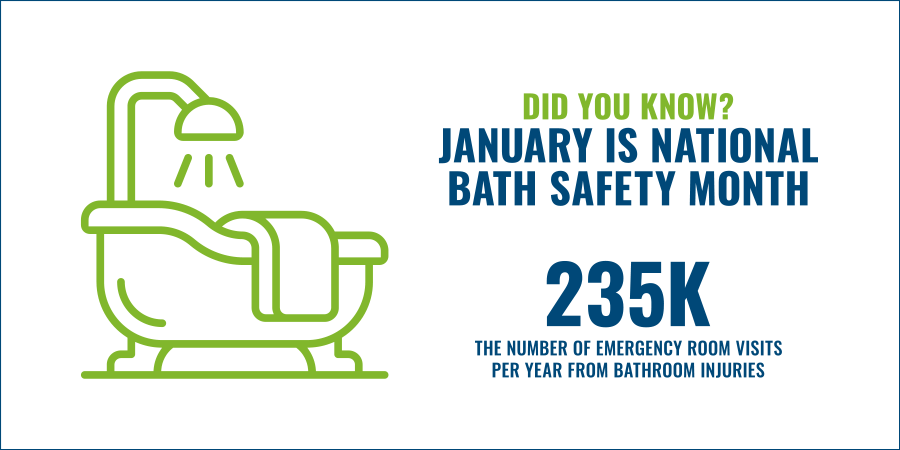
Did you know January is National Bath Safety Month? Join us in the effort to raise awareness about bathroom injuries and how to prevent them! While bathroom safety is important for everyone, it is especially important for people who use wheelchairs or have other mobility issues.
The truth is, bathroom injuries are commonplace. According to the Centers for Disease Control and Prevention, bathroom injuries result in 235,000 emergency room visits every year in the United States for people aged 15 and older.
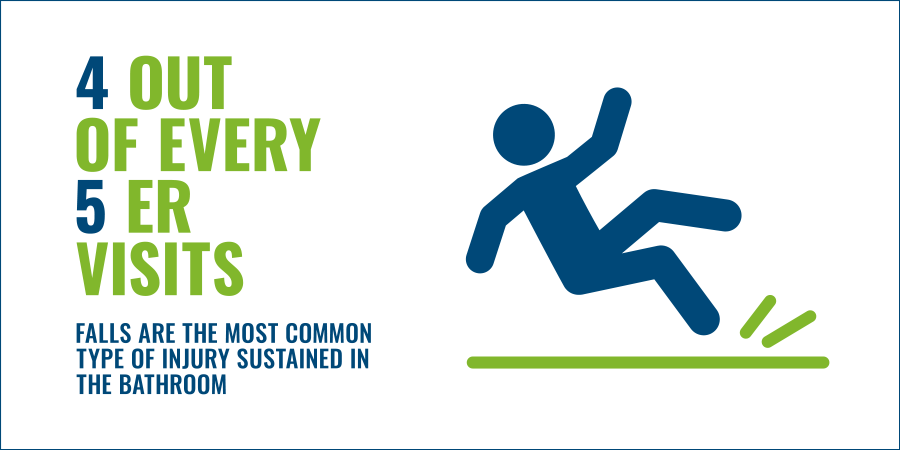
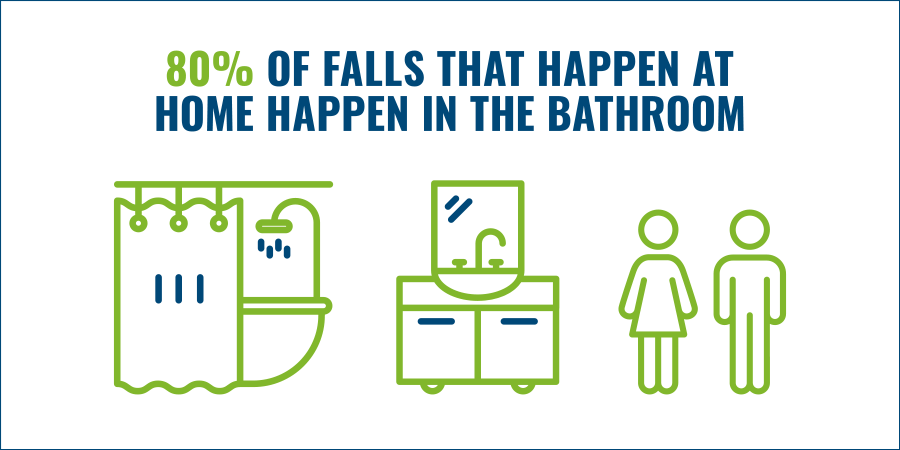
Falls are the most common type of injury sustained in the bathroom, leading to 4 out of every 5 emergency room visits. While people of every age and ability face risks when using the shower, tub, sink, or toilet, bathroom injuries are most common amongst adults 65 years and older.
There are many reasons why older adults face higher risks. As people age, it is common to experience changes in balance, strength, mobility, health, and cognition. Each of these factors contributes toward a person’s risk for falls, slips, and other bathroom injuries. Similar to people of all ages, older adults also experience greater risks related to variables like medication use, choice of footwear, and safety of the living environment.
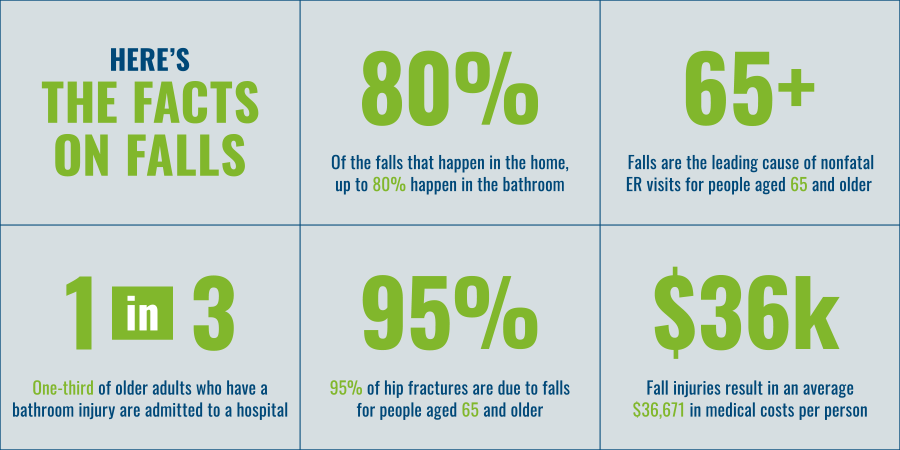
Facts about falls and bathroom injuries
Particularly for older adults, falls can lead to devastating and even deadly outcomes. Consider the following facts about falls:
These statistics might sound alarming, but we also have good news to share: fall prevention is in your hands! There are several ways you can reduce your risk of falling at home as well as other bathroom injuries. By knowing the risks, taking care of your health, and establishing a safe living environment, you’ll improve bath safety and minimize accidents.
Read on and discover how to prevent the 5 most common bathroom injuries. For in-person help, contact your local accessibility experts at Next Day Access. We offer free consultations to help identify potential safety issues in your bathroom. We’ll also offer recommendations for the best product and design options to meet your needs!
Nearly a third of bathroom injuries occur while bathing or showering. This fact makes sense, doesn’t it? With a combination of slick surfaces, higher temperatures, and elevated tub rims or surrounds, people are more prone to slips, loss of balance, or fainting.
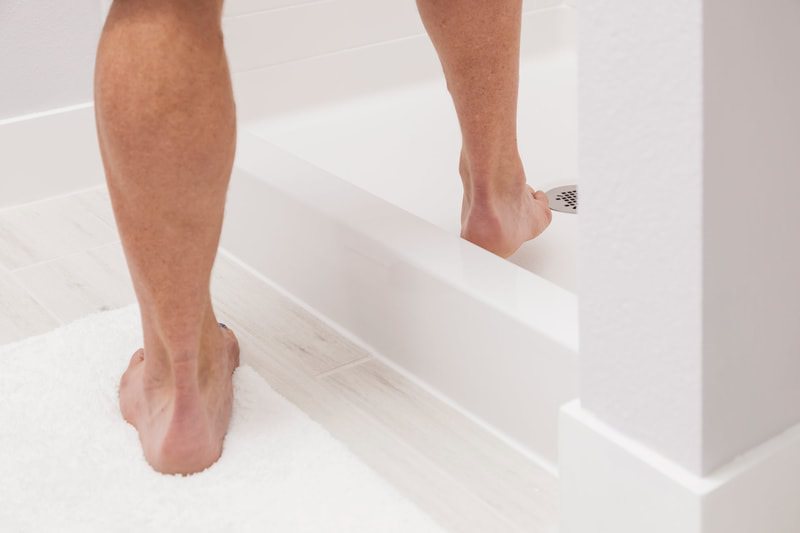
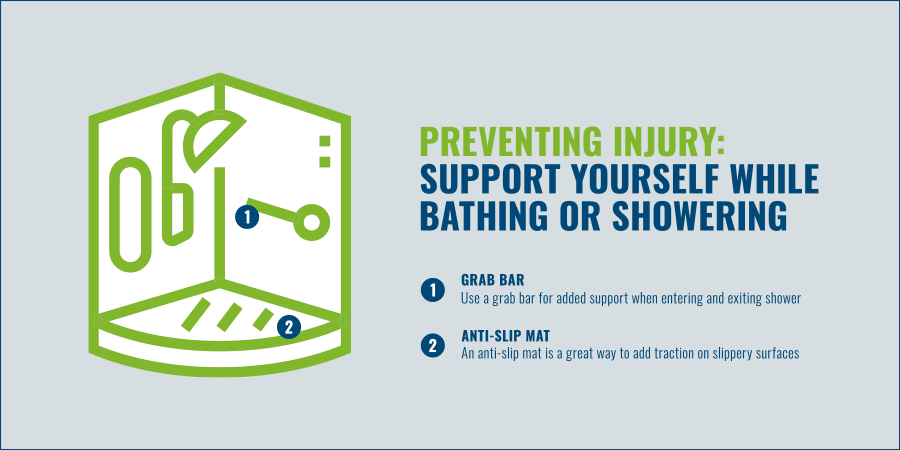
While bathtubs and showers are designed to protect your house from water damage, many lack the necessary safety precautions to prevent slipping. One of the quickest and easiest ways to improve traction is by purchasing anti-slip bath mats or stickers. To choose a bath mat or stickers that reduce risks in tub or shower, look for the following qualities:
Non-slip or anti-slip material that support good underfoot traction when wet
Strong grip to prevent movement against the tub or shower surface
Ease of cleaning to protect against soap residue, mold, and mildew buildup
Sufficient coverage to minimize contact with slippery surfaces
While mats and stickers offer some protection against slipping, they do not account for other injuries sustained while bathing including the loss of balance.
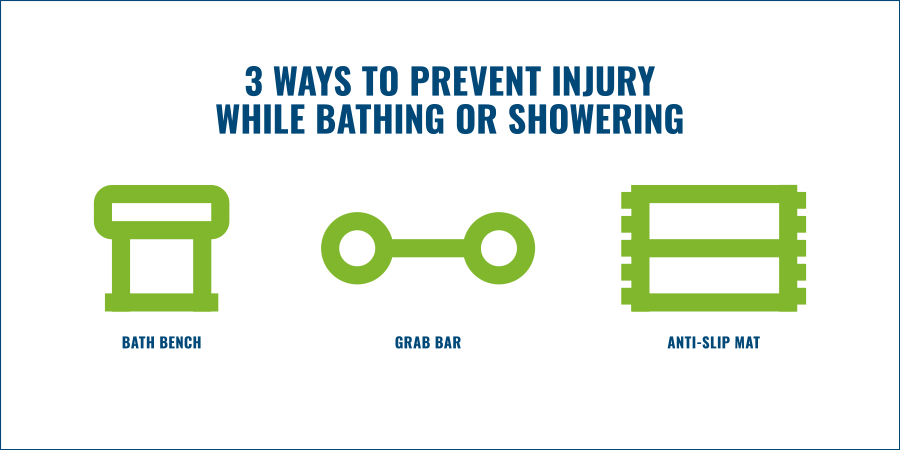
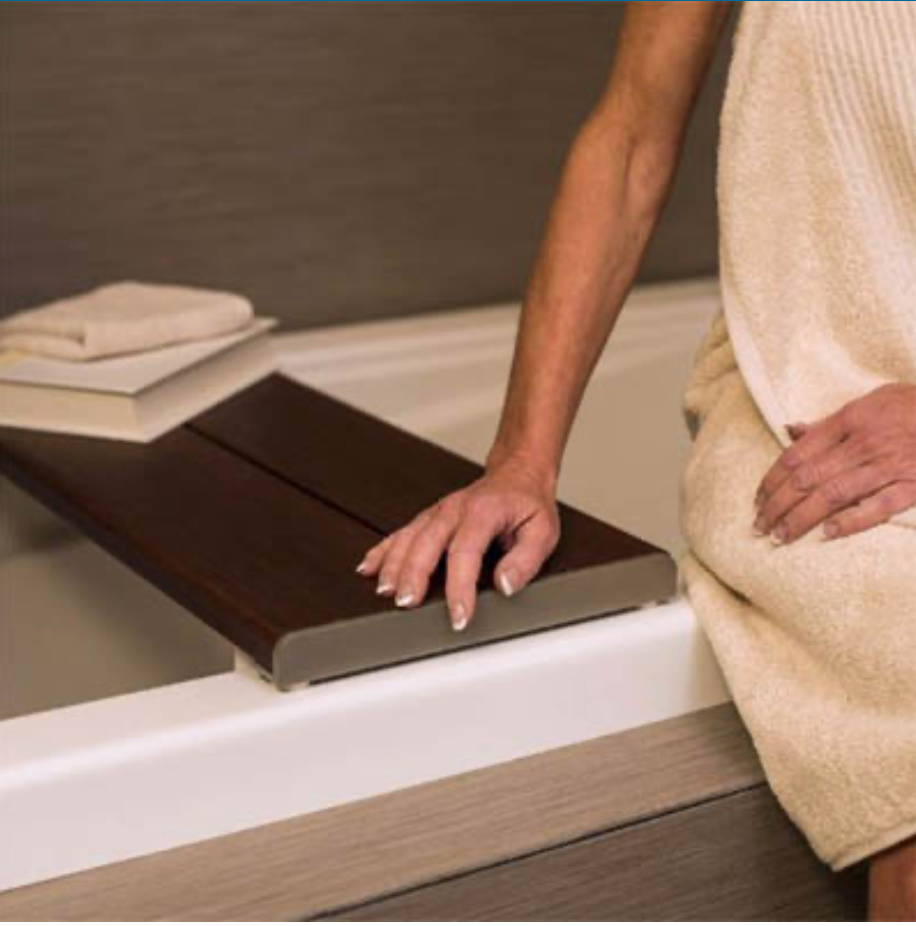
For greater protection, many individuals opt to bathe while seated or lying down. In addition to a non-slip mat, consider options like the Invisia Bath Bench, Rane Folding Shower Seat, or Rane Shower/Changing Bed. Additionally, grab bars and safety poles can improve stability for bathing while standing, seated, or lying down or transitioning between positions.
It is important to remember that even surfaces advertised as “slip resistant” can be hazardous as a result of soap residue, mildew, and mold buildup. For this reason, regularly clean all surfaces in your shower and tub–including mats–as an essential part of bath safety.
If you are interested in a bench, seat, or bed for your tub or shower, contact your local accessibility experts at Next Day Access. We offer free consultations to help you choose the best options particular to your needs and the design of your bathroom.
2. Reduce slip risks outside of the tub or shower.
Slipping is the second most common injury in the bathroom. Just like tubs and showers, bathroom floors are slippery when wet! And floors aren’t the only problem. Many bathroom rugs increase injury risks due to improper traction, drying capabilities, or curling. In fact, bathrooms are the most common place for rug- and carpet-related falls to occur in the home.
Fortunately, you can make a big difference with small additions to your bathroom like weighted shower curtains, non-slip rugs, and grab bars. Weighted shower curtains prevent excess water from leaking onto your floor outside of the tub or shower. If water happens to leak onto your floor while bathing, consider drying the floor before stepping out.
When properly designed, bath rugs can reduce instances of falling or slipping. To choose a bath rug that is more helpful than harmful, look for the following qualities:
Non-slip, non-skid, or anti-slip backing can provide better traction for your feet
Water absorbing can reduce the likelihood of slipping on wet surfaces
Quick drying can limit degradation due to mold and mildew
Low clearance can reduce the likelihood of tripping
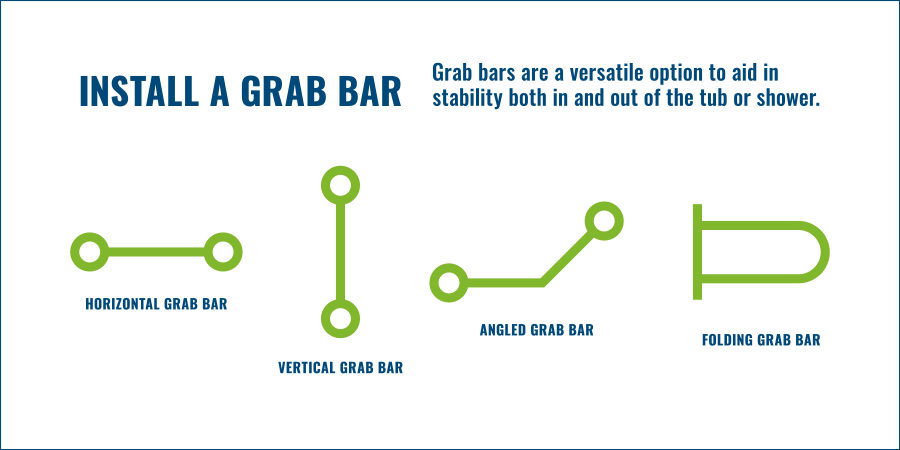
Grab bars are a versatile option to aid in stability both in and out of the tub or shower. As the name suggests, grab bars are designed to be grasped while a person stands still, walks, or transitions between lying down, sitting, bending, or standing up.
Depending on your needs and the design of the bathroom, grab bars can be installed vertically, horizontally, or at an angle. You can choose from a wide range of grab bar styles and materials that fit your idea of home, including options with custom sizes. There are even designs that double as soap holders, shelves, and holders for towels and toilet paper.
Want help deciding where to install grab bars in your bathroom? Contact your local accessibility experts at Next Day Access for a free consultation and estimate. We’ll visit your home and identify how grab bars can aid your safe movement.
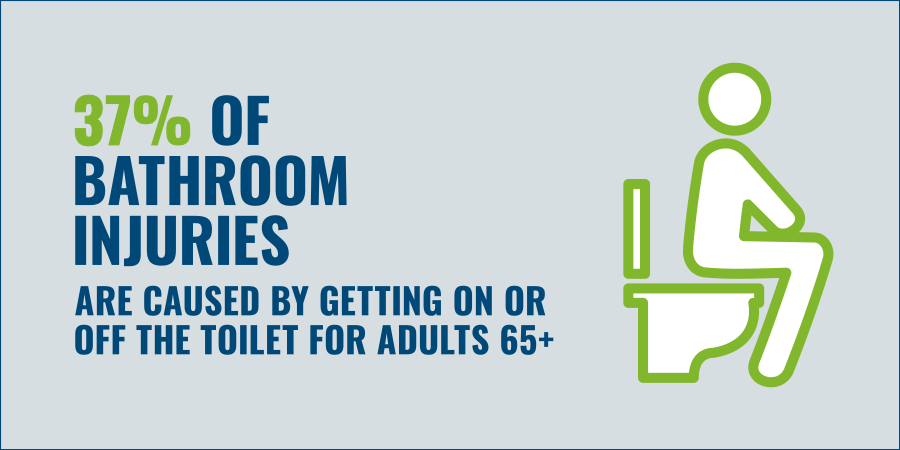
The risks associated with getting on, off, or using the toilet increase dramatically with age, accounting for as many as 37% of bathroom injuries for adults 65 years and older. For people 85 years and older, this rate rises to 51%. In particular, toilets pose a risk for older adults who use the toilet more frequently due to urinary incontinence or those who experience changes in heart rate or blood pressure due to abdominal strain, dehydration, medication usage, or the transition between sitting and standing.
When it comes to toilet safety, slower is safer. Give yourself plenty of time to make your way to the bathroom, seat yourself on the toilet, and stand up afterward. Moving at a slower rate reduces the risk of slipping or tripping. Slow movements also offer some protection against heart rate and blood pressure changes when sitting or standing up that lead to fainting, light-headedness, or dizziness.
Additionally, there are a variety of products that support safer toilet use. A few of our favorites include the following:
Bidet seats. Bidet seats attach to your existing toilet and utilize a soft stream of water for cleaning as an alternative to toilet paper. They can reduce the risk of balance loss from twisting and bending to wipe with toilet paper. They also provide a slightly elevated seat for safer transition between sitting and standing. You can choose options that include heated seats, remote operation, and water pressure control for maximum comfort and ease of use.
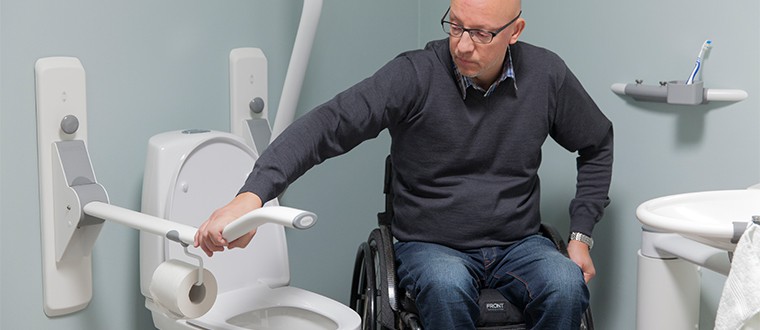
Support arms and grab bars. Installing support arms or grab bars near the toilet provides greater stability when transitioning between sitting or standing, as well as while using the toilet. While grab bars can be used anywhere in the bathroom and beyond, support arms are specifically designed for use around toilets. The anti-slip arms provide steady support while using the toilet, as well as transitioning on or off of the seat.
Accessible washbasins. Accessible washbasins include features like support rails, flexible positions, and adjustable heights. With a wide variety of manual and electronic options available, accessible washbasins provide greater ease of use and movement in the bathroom.
Want professional input? Contact your local accessibility experts at Next Day Access for a free consultation. We can help you design a safer, smarter bathroom.
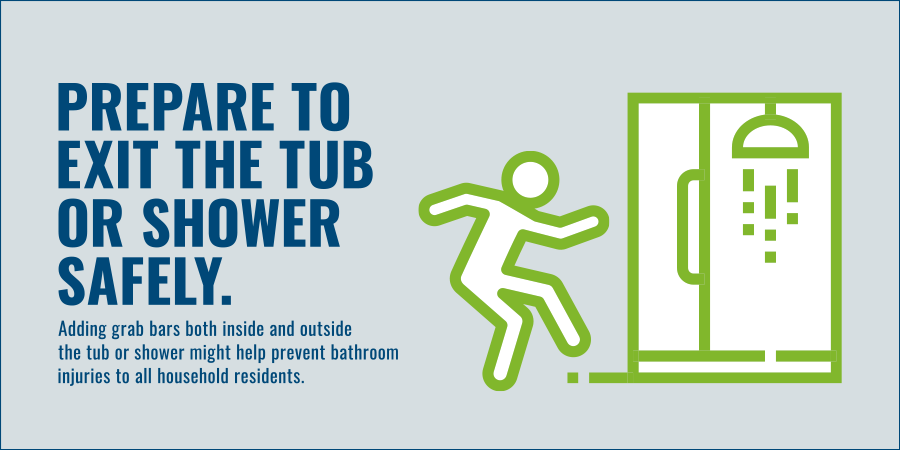
The fourth most common cause of bathroom accidents involves exiting the tub or shower. These accidents often involve tripping over the surround, rim, or lip, or the loss of balance while stepping over them. With approval from a healthcare provider, older adults can exercise to improve function and balance that reduces the risk of falls by as much as 24%.
Because injuries while exiting the tub happen to people of all ages, the U.S. Centers for Disease and Prevention suggests that “adding grab bars both inside and outside the tub or shower might help prevent bathroom injuries to all household residents.” In fact, a recent study showed a recovery of balance 75.8% more often for participants who used a grab bar than those without. In addition to grab bars, other supportive products like safety poles and support arms can further reduce the risk of accidents while exiting the tub or shower.
Curious to know what a safe exit system looks like? Elder Care Consultant Cynthia Wilson offers a brief demonstration of the grab bars installed in her mother’s bathroom. Notice how each grab bar is strategically placed. Cynthia’s mother can use the grab bars to support herself while standing up from the shower bench and taking her first and last steps out of the tub.
Baignoires à l'italienne are another great option for safe entrance and exit from the tub or shower. Walk-in tubs utilize a door that swings open and shut for easy access, and seals watertight for bathing or showering. We offer a wide range of conversion kits, freestanding, and built-in models that fit bathrooms of nearly any size.
You can schedule a free consultation by contacting your local accessibility experts at Next Day Access. We can help you design a safe exit system in your bathroom and install it within hours!
5. Protect yourself from fainting bathroom injuries.
The fifth most common injury sustained in bathrooms relates to fainting. Many fainting injuries relate to a sudden change in heart rate or blood pressure that is referred to in medical terms as “syncope.” Syncope is a common type of fainting that happens suddenly, lasts for a very short time, and ends with spontaneous recovery. While syncope does not always indicate an emergency on its own, the sudden loss of consciousness in small spaces like bathrooms can lead to serious injuries that require medical attention.
The origins of syncope vary greatly including cardiac, neurological, endocrinological, and psychiatric causes. The most common form of syncope is reflex or “vasovagal,” representing a third of cases. Vasovagal syncope involves a nervous system malfunction that can occur in response to the following:
Sitting or standing position
Severe emotional distress
Sudden pain or injury
Overheating
Dehydration
Diuretic or vasodilator use
For individuals with higher risk factors for syncope or other forms of fainting, consider the installation of grab bars and safety poles. These supportive products can increase your peace of mind and help during the early onset of a fainting spell while you still have consciousness.
You can further protect yourself from fainting injuries by recognizing the warning signs. Some, though not all, episodes are preceded by symptoms including:
Nausea or vomiting
Abdominal pain
Feeling dizzy or light-headed
Sweating
Palpitations
If you experience these symptoms in the bathroom, you can reduce the risk of injury by getting flat on the floor. Lie down as safely and quickly as you can, with legs elevated if it is possible. If you cannot flat, consider sitting with your head between your knees. Once your symptoms pass or you regain consciousness, be sure to check in with your medical provider. Sometimes, fainting spells can indicate more serious issues that require immediate attention.
Don’t delay, reach out today.
We hope this article has provided helpful information about bath safety! Please note that this article is intended for informational purposes only and is not a substitute for medical advice. We advise you to consult with your healthcare provider about recommended fall prevention strategies related to medication, exercise, or other lifestyle changes.
If you want help deciding on the best bathroom products for your home, we’re here to help. Contact your local accessibility experts at Next Day Access for a free consultation and estimate. We’ll listen to your thoughts, identify risks, and provide recommendations that increase your peace of mind and support your safety in the bathroom.
When aging adults reach a point where they have accessibility concerns, it is time to consider remodeling their bathrooms to keep them safe. A bathroom not designed for aging adults has many slip hazards, and a simple fall could be more painful and debilitating for an aging adult. Next Day Access offers many solutions to make the bathroom as safe as possible for aging adults. Here are a few tips to keep your aging loved one safe in their bathroom.
Install Grab Bars, Shower Handles, or a Tension Mounted Pole
Aging adults with poor balance will try to steady themselves by grabbing a towel rack or wall-mounted sink. Neither is designed to hold a person’s body weight. Invest in sturdy grab bars, and safety poles. Install the grab bars on the wall around the toilet and in the shower with the shower handles. Make sure they are firmly bolted to the wall and are grip resistant.
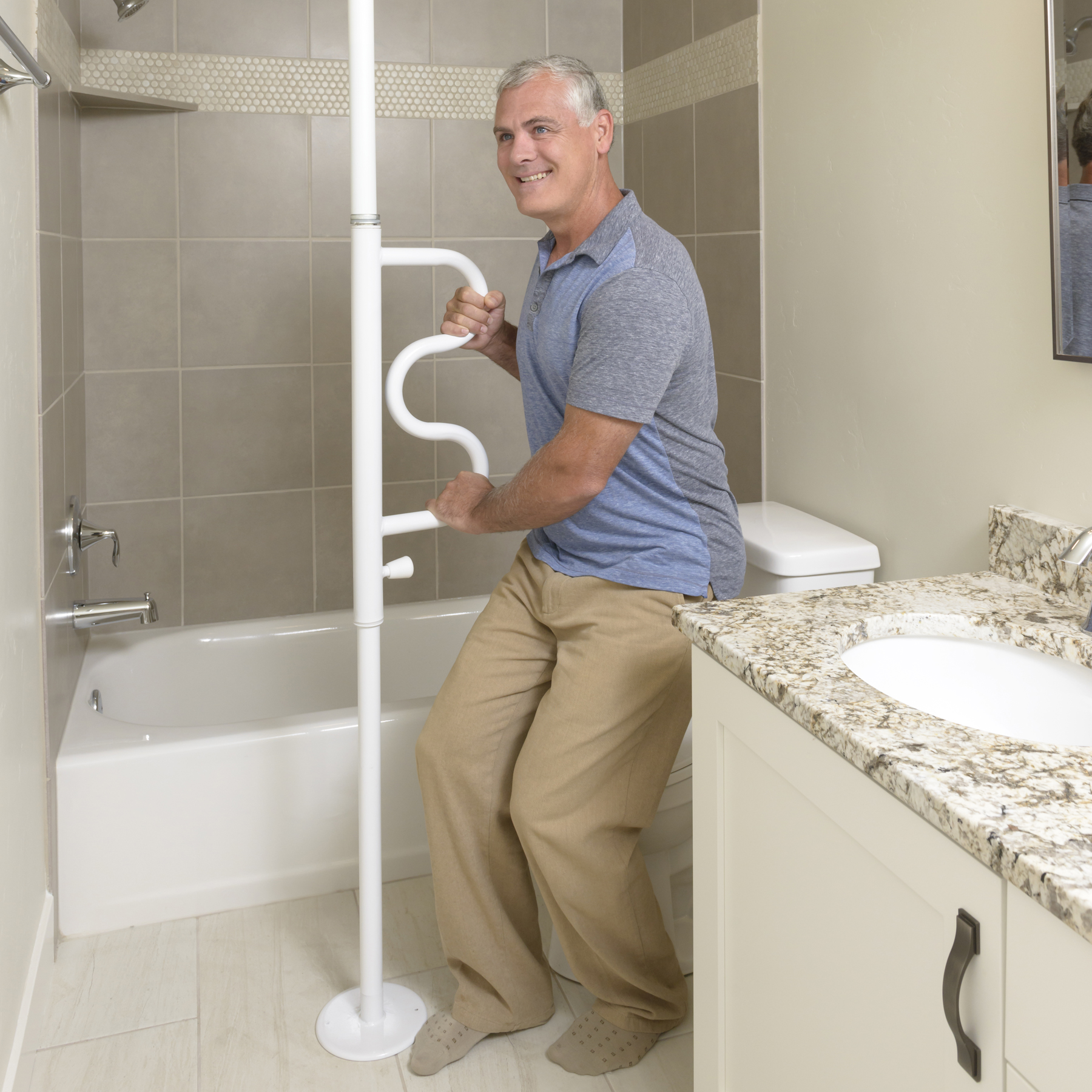
A newer concept for aging adults is the tension-mounted pole. It can be placed anywhere in the house where your aging loved one needs help with balance, but it is especially helpful in a bathroom, alongside grab bars and shower handles. The tension pole is a floor-to-ceiling metal rod with an “S” shape bar in the middle of the rod so your aging loved one can use a hand-over-hand technique to pull themselves up without injury.
Consider Investing in a Walk-In Tub or Quick Tub Conversion Kit
One of the most challenging moves for an aging adult with accessibility concerns is stepping over the tub to shower or take a bath. At Next Day Access, we offer Baignoires à l'italienne. The walk-in tubs have an outward swinging door that allows your loved one to walk straight into the tub. Many also have a tall seat in the tub, so your loved one does not have to bend down when bathing, or if they prefer to shower, the bench acts as a shower seat.
The quick tub conversion kit supplies you with everything you need to turn your existing bathtub into a step-in shower while still maintaining a fully functional bathtub. It is similar to the walk-in tub, but it does not include a bench.
Ensure the Bathroom has Slip Resistant Rugs and Mats
It is inevitable that while showering or bathing, the bathroom floors will end up wet. Make sure to place slip-resistant pads down in the shower and ensure any rugs outside the tub or shower are also slip-resistant.
Install a Bio Bidet
To ensure your loved one gets as clean as possible and for even more ease in the bathroom, you could install a Bio Bidet. We recommend the extremely popular Bio Bidet because it offers both comfort and the functionality of a heavy-duty commode. The Bio Bidet also offers a cleansing method that many people have claimed is far superior to other bidets.
Everything that Next Day Access sells we also install. Our experienced installation team will ensure that each bathroom product is secured correctly. Our goal at Accès le lendemain is for aging adults to be able to age in place. We provide several products that ensure the home is safe and comfortable for them. If you need help remodeling a bathroom to keep your aging loved one safe, do not hesitate to reach out to your nearest Next Day Access. We also offer in-home consultations to ensure the entire home is secure.
Many family caregivers do not get proper training on transferring someone with mobility difficulties from one place to another. For example, one of the most common tasks is to help someone in a wheelchair move safely to a toilet. Thankfully, there are a handful of toilet transfer techniques to help you.
If you do not do the transfer correctly, you could injure yourself or your loved one. We found a few transfer tips from Daily Caring we would like to share with you.
4 Toilet Transfer Techniques for Family Caregivers
Prep the Space
Remove rugs, bathmats, or any other trip hazards in the bathroom in the space you need for transferring.
Move the wheelchair feet out of the way.
Have your body set to perform the transfer.
Move the wheelchair into the proper position and lock the brakes.
Help Them Up From the Wheelchair
Have your loved one scoot up to the edge of the wheelchair and lean forward.
Ask them to either hold your forearms or put their hands on the arms of the wheelchair and push up.
Stand directly in front of them, hold their waist and stand up together, keeping your body stiff and controlled. Use your knees to lower and raise your body. Do not bend over. Bending over is how you could injure your back.
If their legs are not strong, put your knees in front of theirs while they stand. This is called blocking.
If they are weaker on one side, stand on that side to provide additional support.
Sit Them on the Toilet
Using small steps, guide them to pivot and turn 90 degrees and back up until the toilet seat is at the back of their knees.
Help them pull down their pants and undergarments.
Have them bend their knees and easily lower themselves down to the seat. Once again, use your knees to raise and lower your body to avoid injury.
Consider investing in a Bio Bidet. Bio Bidet is known for having the best toilets and toilet seats for all homes. In addition, the cleansing method utilizing a water stream sets them apart from their competition. The Bio Bidet will help ensure that your loved one gets as clean as possible after using the restroom.
Return to the Wheelchair
Get them to move forward on the toilet seat and lean towards you.
Ask them to hold your forearms and push up.
Stand close to them so you can hold on to their waist while you both stand.
Using small steps helps them pivot 90 degrees again and back to the wheelchair. But, first, make sure the brakes are still locked on the wheelchair.
Once they feel the wheelchair seat at the back of their legs, they slowly return to a seated position. You will need to hold their waist as they take a seat.
Essential Safety Tips for Transfer
Never try to pull an older adult up.
Bend from the waist.
Do not let them hold on to towel bars or toilet paper holders, as these could be non-sturdy and cause them to slip.
Make sure they do not hold you by the shoulders or the neck. This will help to prevent injury.
At Next Day Access, anyone with difficulty in mobility can find products to help keep them safe at home and on the go. For the bathroom specifically, we offer Toilet Support Arms, Grab Bars, Drive Commode Chairs, Bio Bidets, and more. Nous contacter to see the many ways we can help improve your life.
Getting an older patient to bathe can be a struggle for many family caregivers. The biggest concerns are if they do not bathe, they could develop infections, produce a strong odor, or become aggravatingly itchy.
Harvard Health recommends showering or bathing at minimum several times a week. Here are a few tips for bathing aging adults to keep them healthy and clean while minimizing stress.
3 Tips for Bathing Aging Adults
Make sure the environment is safe
Use a handheld shower device to avoid spraying them in the face.
Make sure the bath water is at a comfortable temperature.
Make sure these are Barres d'appui in the tub. Next Day Access offers an assortment of grab bars and can install them in the correct areas to help older adults feel steadier when they enter the bathroom.
Use a shower chair to help aging adults that have trouble sitting in the tub.
Keep the bathroom floor clean and dry to help avoid falls.
If your patient does not already have a walk-in tub speak to the family about the importance of installing one. Next Day Access has a conversion kit that can be installed quickly and makes it easier for aging adults to enter the tub.
Set up a portable shower for patients
There are several new ways to get a patient to bathe even if that means installing a portable shower in a room. With a portable shower, they can stay in their wheelchair and easily roll into the shower area.
The portable shower has its own drain and an easy set-up process. A portable shower could ease patients’ concern over bathroom safety, and they will likely be glad they do not have to leave their wheelchairs.
Consider opting for a sponge bath
Bathing and showering are the best ways to clean the body, but if this is not possible, a sponge bath is a good alternative solution. Here’s a helpful step-by-step guide on how to give a sponge bath.
Gather all the supplies you will need and make sure your older adult is nice and warm.
Start from the face and head and move down the body. Clean the private areas last.
For privacy and warmth uncover only the body part that is being washed.
Be sure to use gentle strokes. Remind yourself their skin is far more sensitive.
Use a different washcloth for each area so you do not transfer dirt by using dirty washcloths. Remember, the goal is to get them as clean as they would get from an actual shower or bath.
We hope these tips will help you have an easier time bathing your loved one or patient. At Next Day Access, we have everything you need to ensure aging adults living in place will feel safe not only in their bathroom but throughout the house. Nous contacter today for a complimentary in-home consultation.
Every January is a time for us to take extra precautions while bathing. Taking a bath is a regular occurrence, but it is also a potentially hazardous activity. According to The Center for Disease Control and Prevention (CDC), drowning is a leading cause of death. Infants and adults older than 85 are most likely to drown in a bathtub. This grim fact is why we place importance on bath safety each January. In honor of bath safety month, let’s look at a few ways to improve your bathroom safety.
The National Institute on Aging reports 80% of people 65 years and older fall in the bathroom. At Next Day Access, our goal is to help seniors aging in place and people with disabilities feel comfortable, independent, and safe. We offer a variety of products to make your bathroom safe such as the following.
Quick Tub Full Convertible Kit
Stepping over a tub to get in for a bath is the quickest way to cause a trip and fall. To prevent this, you can convert your bathtub into a walk-in shower by adding a small door to the side of your tub. Our Full Quick Tub Convertible Kit supplies you and your loved ones with everything you need to turn your existing bathtub into a step-in shower while maintaining a fully functional bathtub. Converting back and forth only takes a few seconds.
Rane- RA2 Tahoe Walk-In Bathtub
The RA2 Tahoe is a freestanding or built-in tub designed for small to medium-sized bathrooms where space is limited. The low threshold and wide inward swinging door allow easy access for people with various degrees of mobility. The roomy contoured seat allows the user to sit comfortably and safely in a slightly reclined position.
Invisia Accent Ring
The Invisia Accent Ring is another form of a support bar that provides support directly above your shower valve when bending over or reaching to turn the water on or off. The Invisia Accent Ring is stylish with a chrome finish and looks sleek above your faucet.
Prestigio Chrome Flange Folding Grab Bar
Grab bars should be placed strategically throughout the bathroom. This grab bar folds back when not in use which makes it convenient to use. The folding feature also makes it convenient to access.
Next Day Access offers many different styles of grab bars to choose from. When you consult with one of our experts, we can help you figure out the proper placement and correct grab bars for your home.
Many of these products can be installed quickly with little interruption to your daily activities. At Next Day Access, we respect your time and privacy and will work around your schedule to make the process run as smooth as possible.
We hope you will browse the website or come to our store to see the bathroom safety options we offer. Don’t hesitate to get in touch with us at Next Day Access for help to make your bathroom safer. We can provide a free estimate for you. Remember, we are here to help you feel comfortable, independent, and safe.
If you experience mobility challenges, you know getting into a shower and showering comfortably can be challenging. At Next Day Access, our mission is to help seniors aging in place and people with disabilities feel comfortable, safe, and independent at home. We offer a variety of styles of shower chairs to help increase your comfort and ease of access. We hope our list of shower chairs will help.
What is a Shower Chair?
Before we discuss the assorted styles of shower chairs, just what is a shower chair? According to Chair Institute, “A shower chair is typically a four-legged chair with rubberized feet, usually made with aluminum legs and a durable plastic seat used to provide additional support in the bath or shower and to make getting in and out of the bath and shower easier.”
Folding Shower Seat
This sturdy assistive bathroom aid is a favorite among customers. The seat stays installed in the shower and folds up when not used. When users go into the shower, they only need to pull the seat down, and voila, a shower seat. These seats usually have a grab bar nearby to supply an added level of safety.
Transfer Bench
Transfer benches are extremely helpful when moving from a wheelchair to a shower bench. It has two rubberized feet placed outside the tub, with the other two inside the tub. The rubberized feet supply a sturdy grip on the floor. The user slides across the wheelchair to the bench.
Folding Stool Style
This stool is considered the most cost-effective and simple to use. The durable stool has rubberized feet and handgrips to help them move to and from the shower. No seat on the back helps with washing that area of the body. It also helps the stool to be easier to carry out of the shower
Aluminum frame bath chairs are lightweight, durable, and corrosion-proof. The chairs come with simple instructions and assemble quickly. The legs are height adjustable for your needs and angled with suction-style tips which provide additional stability in the shower.
You will find most of these shower chair designs at Next Day Access, and if we do not have them in stock, we can get them ordered for you. We want to keep you safe, comfortable, and independent.
One of the biggest priorities of caregivers and family members is keeping our loved ones safe and healthy. When it comes to caregiving aids, Next Day Access understands even the simplest product has a difference in comfort, safety, and independence. Transfer poles are only one of many solutions designed to make life easier for both individuals.
What are transfer poles?
A transfer pole is a floor-to-ceiling grab bar. They provide safe and secure support for sitting, standing, or transferring a loved one to their mobility device. It can reduce slipping or falling in the bathroom, bedroom, or even the living room.
Types of transfer poles
If you have trouble deciding which transfer pole will best accommodate your loved one or patient, our accessibility experts can help you choose. Here are some of the options we offer:
Stander Security Pole and Curve Grab Bar
The Stander Security Pole and Curve Grab Bar is a 2-in-1 safety solution combined with a transfer pole and a rotating grab bar. The grab bar has a 360 degrees rotation with a lock feature in eight different spots every 45 degrees. And no worrying about drilling holes in your ceiling because it is tension mounted. It secures in place by tightening the pole between the floor and ceiling.
HealthCraft SuperPole
We also offer the Healthcraft SuperPole. Designed like the security pole, it helps with standing, transferring, or moving in bed. However, the installation is different. The bottom of the pole has a jackscrew, which turns to create pressure between the ceiling and floor.
HealthCraft SuperPole with SuperBar
HealthCraft also offers the SuperPole with SuperBar. It is the same as the SuperPole but with an attached horizontal bar. It provides more stability and support for those who need more assistance anywhere in the home. Both the pole and bar have foam grips to make it more comfortable and prevent slippages on the hands.
Whichever pole you decide, it will make a difference in your and your patient’s life. The transfer pole creates a safer and more independent lifestyle for both of you. Let Next Day Access help you guide your decision. Contact us for a free in-home safety consultation.