
Entrez votre terme de recherche ci-dessus.

We all know that walking is good for physical and mental health. But did you know that walking can keep your brain healthy and slow the progression of memory loss? A recent study found that middle-aged and older people with early signs of memory loss increased their cognitive health after they started walking frequently. This is because walking increases oxygen and blood flow to all parts of the body, including the brain.

What happens to our brains when we walk

If our brains receive more oxygen, that’s a good thing. According to Neuropeak Pro, our brains use about 20% of our body’s total oxygen supply, so if we don’t get enough oxygen up there, it’s easy to feel “foggy.”

Additionally, a third of our brain is made up of blood vessels. So with increased blood flow to the brain, there is better cognitive function, improved memory, and protection against decline.

Walking several times a week for 30 to 60 minutes can:

  • Keep thinking, reasoning and learning skills sharp
  • Improve memory and cognitive function for people with mild Alzheimer’s disease or mild cognitive impairment
  • Slow the progress of Alzheimer’s 
  • Increase the size of the part of the brain that’s associated with memory formation.

More research is needed to know how physical activity may improve memory. However, it is important to walk and exercise to stay healthy physically and mentally. At Next Day Access, our goal is to help you keep safe and comfortable while aging in place. We offer accessibility and mobility solutions for your home. Nous contacter to schedule a free home-assessment.

World Occupational Therapy Day is on Wednesday, octubre 27th of this year. This day was initially launched to celebrate and heighten the visibility of occupational therapy. The theme of this year’s celebration is “Belong. Be you.” This year’s theme promotes the power of diversity and inclusion as we work together to build community and resilience. 

What is Occupational Therapy? 

Occupational therapy teaches you how to adapt. After an illness or injury, tasks may not be as easy as they used to be, especially if the pain is involved. Your OT will set up a plan to improve the way you accomplish activities. They determine if you need to learn how to do things in a completely new way or if you need assistance with remembering how you once performed the task. If they notice the lesson is painful, they will help you figure out how to achieve your everyday activities with minimum pain.

People with the following struggles find enormous relief when they see an occupational therapist: 

  • Spinal cord injury 
  • Low vision  
  • Alzheimer’s disease 
  • Poor balance 
  • Cancer 
  • Diabetes 
  • Multiple sclerosis 
  • Cerebral palsy 
  • Mental health or behavioral issues 
  • Joint replacement 
  • New Injuries that change the way the patient will function through life 

Occupational Therapists Aid Seniors Choosing to Age in Place 

While Occupational Therapists excel at helping those with an injury, disability or illness, they can also help if you have an older loved one choosing to age in place. They can teach them how to adjust to daily life, whether it be bathing, dressing, or learning how to adapt to home modifications.

At Next Day Access, we are proud to aid occupational therapists when they need products for their patient’s homes. We have a wide variety of mobility equipment, home modifications, and accessibility products to help ensure that anyone living with a disability or aging in place is secure and comfortable at home. You can even Nous contacter for a free in-home consultation.  

Next Day Access is proud to announce the grand opening of a new franchise location in Toledo, Ohio. Jeff Rowe is the President/Owner of Next Day Access Northwest, Ohio. Next Day Access provides accessibility and mobility solutions to customers in local communities. The new location will focus on helping customers live independently and age-in-place by offering and installing wheelchair ramps, stairlifts, grab bars, bathroom safety, scooters, and more. 

Prior to becoming owner of Next Day Access Northwest, Rowe brings years of experience in sales in a variety of industries, from medical devices and pharmaceuticals to hospitality and material handling equipment. 

“I wanted to work more with end-users that sold products that would be life-changing for people,” says Rowe. When asked why he chose the Next Day Access brand, he said, “Next Day Access checked all the boxes I was looking for since it is a growing industry selling life-changing products. Once meeting the Home Office team, I knew they were good people, and our visions aligned perfectly.”

Anyone with mobility-related disabilities who may need a temporary or permanent solution or wishes to age in the comfort of their own home can now turn to a locally owned and operated business in Toledo, Ohio. The new Next Day Access location is backed by a national brand they can trust to meet all their needs in an expert and professional manner. In addition to the Northwest, Ohio area, Next Day Access has locations in the United States and Canada.

Now more than ever, scams are much more common. While anyone can get scammed, most times, it’s your aging loved ones that are the victims. To help combat this form of elderly abuse and really avoid elder fraud altogether, we went to Consumer Reports and the Federal Bureau of Investigation (FBI) and the Office for Victims of Crime (OVC) to get their tips on keeping our loved ones safe from fraud artists.  

Of the different forms of elderly abuse or elder fraud, financial scams are the most prevalent. In these scenarios, a senior citizen is coerced, bullied, or tricked into relinquishing their hard-earned assets. Studies show that only 1 in 44 victims report the crime, making it more difficult for the FBI to combat it.

Additionally, seniors may be less inclined to report fraud because they do not know how, or they may be too ashamed of having been defrauded. They also may be concerned their relatives will lose confidence in their abilities to manage their finances. And when one chooses to report a crime, they may be unable to give detailed information to investigators. 

“Often the ones in a position to see what is happening in time to help stop a fraud are the ones who are part of the payment process. They include the banks, gift card sellers, and others,” says George Slover, senior policy counsel for Consumer Reports. But there is still a long way to go in stopping fraud against senior citizens, and individuals are still the first line of defense.  

A few tips to keep you or your loved ones protected against fraud: 

  • Search online for the contact information and the proposed offer. Sometimes you can find other people post information online about a similar scam. 
  • Resist from acting quickly. Scammers rush their victims and like to create a sense of urgency and persuade victims into an immediate action.  
  • Don’t respond to text messages or calls that come from numbers you don’t recognize. If it’s important, the caller will more than likely leave a voicemail.  
  • Be aware of emails that note a change of financial information, attachments, links, unusual content and requests. Validate changes to financial date by photo with a trusted contact every time.  

Your protection and safety are top of mind. To learn more about how to stay safe from fraud, the FBI site has a list of common scam scenarios, resources, and more. 

Research suggests that listening or singing songs can provide emotional and behavioral benefits for people with Alzheimer’s disease and other types of dementia. The reason being is that the brain area linked to musical memory is undamaged by Alzheimer’s. It has been proven that music aids in relieving stress, reducing anxiety and depression, mildly improving memory loss, and calming agitated patients. It can also provide a way for caregivers to connect with loved ones suffering from Alzheimer’s who have difficulty communicating. 

This type of therapy has been proven to bring patients who have dementia to a better place cognitively and emotionally. There are many more reasons for music therapy than just its ability to help with memory loss. Others include:  
  • Treatment for pain management 
  • Physical issues involving gross motor skills or fine motor skills processing grief 
  • Strengthening respiratory function 
  • Stress management  
  • Physical and cognitive health issues
If you would like to use music to help a loved one who has Alzheimer’s disease, consider these tips: 
  • Think about your loved one’s taste in music. What music brings back memories of happy times in your loved one’s life? Involve family by asking them to suggest songs to make playlists. 
  • Set a mood with your choice of music. Play music or sing a soothing song to calm your loved one during mealtime or a morning hygiene routine. When you would like to encourage and excite your loved one’s mood, then you can choose more upbeat music. 
  • Avoid overstimulation. When playing music, diminish competing noises if possible.  
  • Encourage movement. Help your loved ones to clap along or tap their feet to the beat.  
  • Sing along. Singing along to music with your loved ones can enhance the mood and strengthen their trust in you. Some early studies also suggest singing can help stimulate unique memories. 
  • Pay attention to your loved one’s response. If your loved one enjoys certain songs, play them often. If your loved one reacts negatively to a particular piece or type of music, change the song right away. 

While the disease currently has no cure, others focus on different ways to improve a patient’s quality of life. Music offers many benefits for Alzheimer’s patients in varying stages of the disease. At Next Day Access, the primary goal is to provide your aging loved one with a comfortable home that is safe and secure. We specialize in making sure your home has all the home modifications in place to keep your loved one happy at home. Nous contacter to schedule an in-home consultation.  

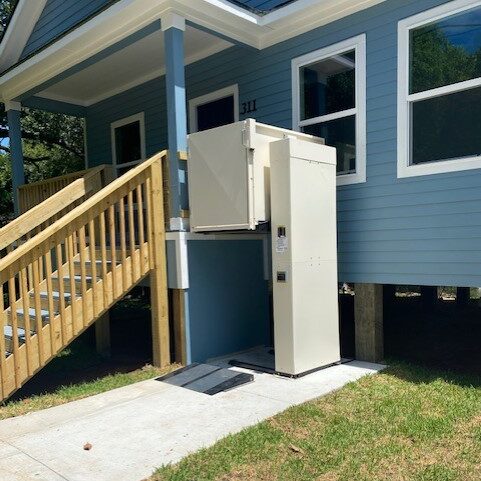
Even though porch season is winding down, we wanted to share with our readers how convenient and efficient a porch lift, also known as a vertical platform lift (VPL) can be for people with limited mobility. A porch lift is a cost-effective solution to gaining access to reach raised porches, decks, and other elevated areas for wheelchair, power chair, and other mobility devices.

Often when there is not enough space for a ramp, porch lifts can be a solution. Here are a few reasons you might decide if one is suitable for you. 

Less Space Than a Ramp

Trying to decide whether you need a ramp or a lift? How much space do you have? A porch lift will require a 5′ by 7′ area regardless of the rise. A ramp’s size will increase with every step.

The Americans with Disabilities Act (ADA) gives guidelines for ramps. It is a good reference point for ramp slope and length. At a residential home, the standards are different, but for public property, the ADA Standards require a 1:12 slope ratio or 4.8-degree slope.

That requires for every inch that rises, an additional foot is added to the ramp length. For example, if an entrance has three steps with a 7″ riser per step, it will require a 21′ ramp.

Although these calculations were based on a public space, it shows just how significant a ramp is compared to a porch lift. If your space is small at home, a porch lift can be a better use of space than a ramp. 

Simple and Safe Without Assistance 

Of course, there can be safety concerns with any moving platform. However, with a porch lift, you do not need to be dependent on a caregiver. If your mobility allows you to hold down the lever or button, you can operate a porch lift and thus be able to come and go as you please. 

It Works in Weather Conditions and Requires Little Maintenance.

Porch lifts can withstand weather conditions. If temperatures consistently drop below freezing in the area where you live, consider a cold-weather package to ensure your lift will run smoothly on frigid days. It is recommended to have your porch lift serviced annually to help avoid malfunctions. 

At Next Day Access, we are proud to sell, install, and service porch lifts. Our company goal is to provide products for our customers that give them more independence, keep them safer and more comfortable at home. Nous contacter to schedule a free in-home consultation to help you ensure your home is accessible as it can be.  

Have you reached the point in life where it is time to take care of the parents or grandparents that once took care of you? As your loved ones grow older, they often need help with small tasks like picking up groceries, making health-related decisions, or bathing. Whatever their needs may be, it is essential to be supportive and not overbearing. Here are a few steps to help guide you as you navigate supporting an aging loved one. 

Step 1: Assess Their Needs 

Assessing your loved one’s needs is most important when learning to be supportive rather than making them feel like they have not lost their independence. Experts recommend considering the following issues seniors often face to help you better assess their needs:

  • Family support 
  • Home safety 
  • Medical needs 
  • Cognitive health 
  • Mobility
  • Personal hygiene 
  • Meal preparation 
  • Social interaction 

How well do they handle each area listed above? Try to monitor their ability to address each of these areas on their own. Regarding family support, is there another family that can help? If so, it is an innovative idea for you to keep a family notebook. In this notebook, you can share with family when you notice they might lack the ability to care for themselves or are unsafe. You can work together to make the necessary changes.  

Step 2: Be Financially Prepared 

As parents or loved ones grow older, they may need help managing finances. While having conversations about money can be awkward, and some may want to avoid it, discussing it now can help prepare for the future. You can start the conversation by asking about essential documents, gathering information about accounts and key contacts, and helping with deciding long-term plans. If you talk to your loved ones now, it will give them more control over financial decisions, so you aren’t overwhelmed with what they would want in an emergency.

Step 3: Install Home Modifications 

To avoid your loved one from sustaining an injury in their home, having accessibility experts evaluate their home for any safety concerns is essential. Older adults fall easier, and a fall can cause injuries or even death. With home modifications, such as Barres d'appui or stairlifts, your loved one can live comfortably and safely at home.

It is a noble endeavor to take on someone else’s needs. It can sometimes feel daunting, yet if you have a plan, you will be more capable of meeting your loved one’s needs. Next Day Access is here to help. Next Day Access can assist you with determining the home modifications you will need to ensure your loved one stays as safe as possible. Nous contacter for a free in-home consultation. 

Making a tiny bathroom accessible may seem impossible, but you can do it with some creativity. There are so many design options these days that you can easily create a tiny bathroom accessible while also being sleek and stylish. Here are a few tips to get you started with designing an accessible bathroom for a small space. 

Change the Door 

Most people with limited mobility may say that a barn style or sliding door is preferable over a swinging door. Maneuvering around a traditional swing-in or swing- outdoor can be difficult when turning a wheelchair. It is also a clever idea to widen the doorway. A wider opening is hassle-free and safer for anyone using a mobility device.  

Remove the Tub and Shower Enclosure 

Believe it or not, you can still shower in the bathroom if you tile the entire bathroom floor and set up proper drainage. Once you install an adjustable handheld shower, you can use large glass panels or huge shower curtains to contain the shower spray. Other options could be a walk-in tub or a bathtub modification kit. The kit allows you to turn any tub into a walk-in shower, creating a safer maneuver into the shower. 

Install a Smaller Sink 

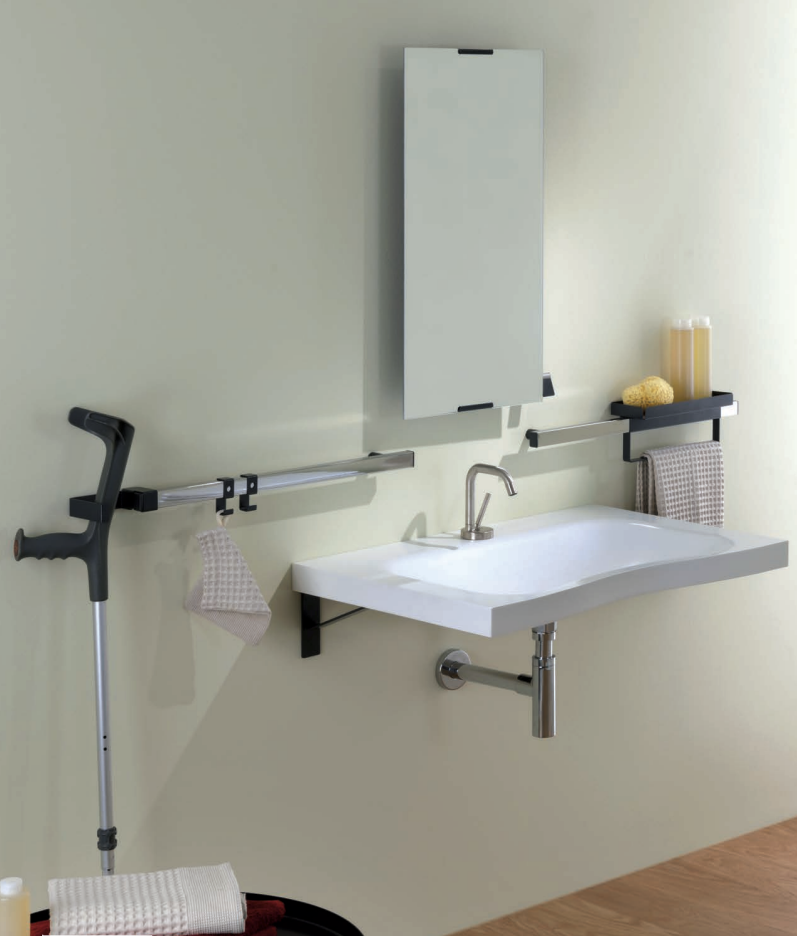
A sink with a shallow basin at wheelchair height is ideal. When creating an accessible sink, allowing space for the wheelchair user to slide under is ideal. Think slim when choosing a sink. You can get one with counter space but leave the bottom area open. For a tiny bathroom, your sink needs to be small and as tucked away as possible. 

At Next Day Access, our goal is to help provide accessibility or mobility solutions to individuals with limited mobility or caregivers to help create a safer and more comfortable lifestyle. Our experts can help you design an accessible bathroom, even if space is an issue. Contact us today to schedule a free in-home evaluation.

A typical closet design can be frustrating if you have limited mobility. A custom closet layout will help your mornings be more convenient and help with your mental health. You will be able to get the most from your space and quickly get to those hard-to-reach items. Here are five steps to get you started on achieving more closet accessibility.

5 Closet Accessibility Ideas For Your Aging Loved Ones

1. Change Out the Doors 

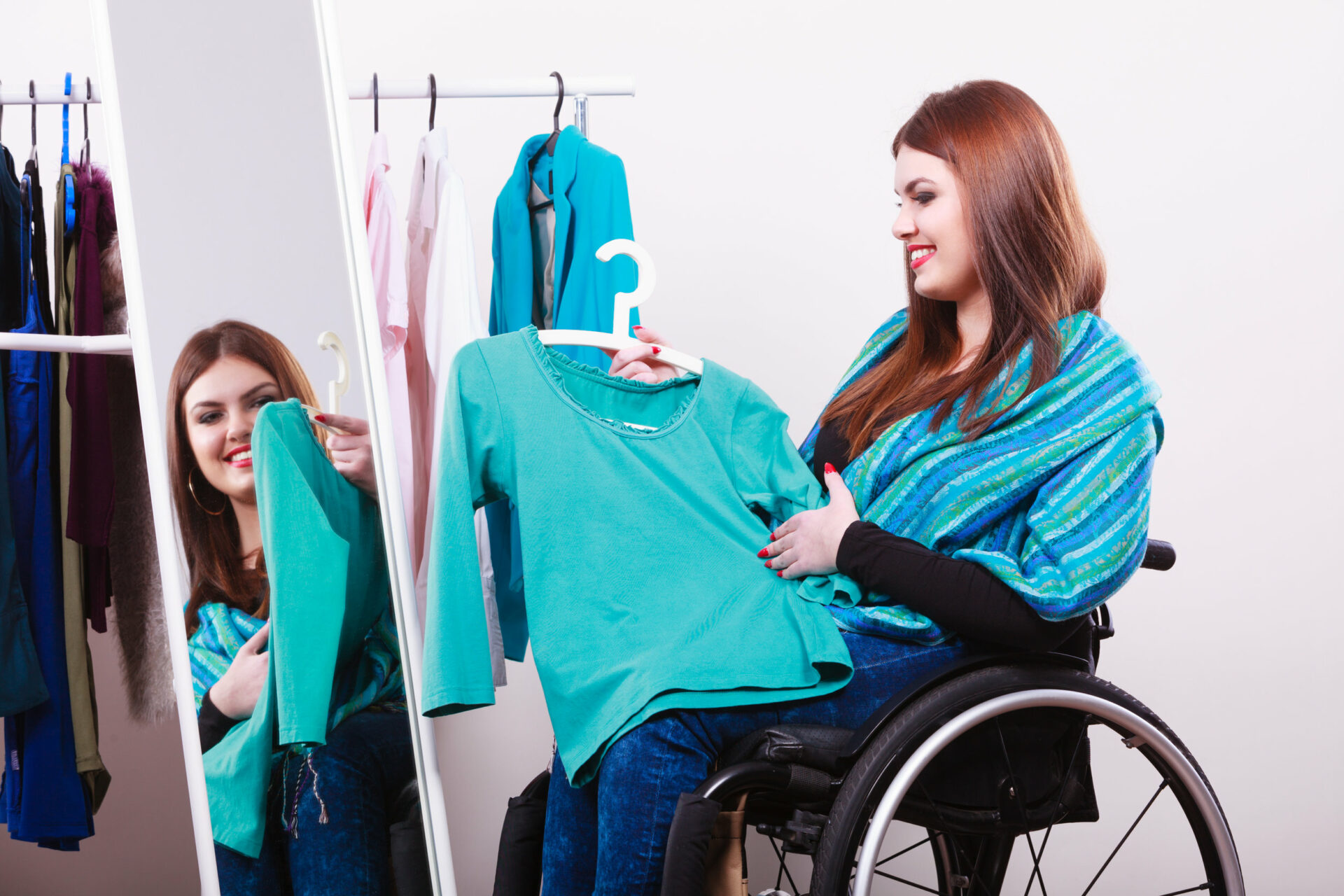
The very first step you will want to take is investing in sliding doors for your closet. A traditional swinging door can make it harder to navigate in and out of space. Also, make sure the knobs to push the sliding door open are low enough that you can reach them comfortably. 

2. Hang Two Closet Rods 

When using two closet rods (an upper and lower one), with the lower rod 30″ off the ground, the lower rod placement will be easier if you’re in a wheelchair; this can help reach items without causing strain. For the special occasion garments, they can go on the top rod. When you need your special occasion garments, you can use a pull-down closet rod, which will conveniently bring your clothes down to you. 

3. For Dressers, Think Deep 

Dressers are great for storage space, especially if the dressers are deep rather than narrow. If you’re in a wheelchair the size and placement of drawers matters.  If the drawers are deep the user can store more with less hassle. It is recommended that dressers sit at a height of 33” off the ground to get the most ideal leverage.  

4. Incorporate a Lazy Susan into your Closet 

Yes, the same Lazy Susan one might see in a kitchen. A Lazy Susan is helpful because of its rotation. You will no longer have to reach deep into your closet to achieve your favorite bag. A Lazy Susan is perfect for accessories or even shoes. 

5. Look into Slide Out Storage Features 

When you have limited mobility, slide-out storage features should be a feature of your accessible closet design. Even a laundry hamper would work perfectly. As you need to dispose of dirty clothes, pull the hamper out, throw in the clothes and push the hamper back into its original storage area. Of course, this will also help when it is time to wash your clothes. Just unhook the hamper from its sliding rod, and you are ready to start washing. 

At Next Day Access, our goal is to help anyone with limited mobility feel comfortable and safe at home. With one call, we can do an in-home evaluation to help you identify any area in your home where modifications can help you stay longer in your home. Nous contacter today for all your accessibility and mobility needs.  

Gardening is a popular hobby that many people can enjoy. It is a healthy, safe, and comfortable physical and mental activity. However, as you get older, this hobby can become difficult because of limited mobility. Luckily though, there are many ways you can still enjoy gardening. Accessible gardening tools can help you avoid causing strain to your body.

Here are some suggestions on accessible tools and some tips on better gardening practices for limited mobility:

Invest in a Raised Bed or Plant in Containers 

If you have trouble with bending down, then bring the garden up to a comfortable height. Raised garden beds bring the garden up to a comfortable height for the gardener. You will not have to bend and reach as much. Another good thing about raised beds is it doesn’t require much digging.

If you decide to maintain multiple raised beds, you might consider creating wide, level pathways between them. The paths could be composed of pea gravel, pavers, or brick. The route will help with weed control and provide a flat, secure surface. 

Invest in a Rolling Work Seat 

Consider investing in a rolling work seat. A rolling work seat can help you move around the yard and avoid pain and injury from kneeling, squatting, or bending. The wheels are created to move effectively over rough terrain, and the height gets you closer to your garden while still supporting your body.

Look into Tools with Long Handles 

Edging the lawn is necessary when you are dealing with garden beds dug into the ground. Keeping the grass out of your garden can be challenging when bending over to use standard garden tools. Luckily, you can get edging sheers and pruners with an adjustable telescopic handle.

You will find that telescopic handles are an essential part of adaptive gardening tools for wheelchair users. It might take time to become precise with these tools, but once you do, your yard and garden will flourish.  

At Next Day Access, we love to help our customers continue to enjoy their outdoor hobbies. While we do not specialize in accessible gardening tools, we specialize in many other accessibility products and mobility equipment. Nous contacter today if you or your loved one needs any help making their home safe and more comfortable. 


Avis des clients

FrançaisEspañolEnglish