
Entrez votre terme de recherche ci-dessus.

If you are working with a doctor to help the aging adult in your life get the best care possible, how do you determine if every recommended treatment or test will be harmful or helpful? Yes, Doctors are the experts when it comes to treating disease, but you are the expert at knowing what the aging adult in your life wants or needs.

Therefore, it is important you attend every doctor’s visit with them. Some aging adults may not be able to convey their direct wishes and rely on you to help them speak with the doctor.

The doctor needs you to let them know if the treatments they would like to try are realistic for the aging adult’s situation and if they will actually improve their quality of life.

Here is a list of 5 questions you should have prepared to ask the doctor at your loved one’s next appointment. 

5 Questions Aging Adults Should Ask Doctors to Prepare

  1. Do they really need this test? Usually, the tests are essential because they help the doctor or nurse determine the correct treatment. Yet, if the tests are invasive or painful, your loved one might not want to go this route. If you and the doctor agree the tests are crucial, you could take some time alone with your loved one to gently explain why the tests are important and encourage them. Remember, however, the choice is ultimately up to them. 
  1. What are the risk factors of the tests or treatments? Will there be side effects? Will the results involve more testing, possibly leading to another procedure? 
  1. Is there a safer or simpler option? There is a chance that your loved one just needs to make lifestyle changes, such as eating better and getting more exercise. 
  1. What happens if your loved one decides they do not want to do any tests or treatments? Ask the doctor if the condition will get better or worse if they do not have the tests right away? 
  1. How much will the treatments or tests cost? Again, this is your opportunity to determine how much their insurance may cover. It would help if you also used this time to ask about generic medication vs. name-brand medication. 

Be an ally to the aging adult in your life. Make sure you talk to the doctor about them receiving the right amount of care. For more questions aging adults should ask doctors, go to 50 Questions You Should Always Ask Your Doctor After 50.

At Next Day Access, our goal is to support caretakers and aging adults by offering all the supplies they need to live a comfortable and safe life at home. We offer everything from Fauteuils roulants to in-home elevators. We also offer smaller devices such as handrails or Barres d'appui. Contact us today for a complimentary in-home consultation

Sadly, many people in hospitals or nursing homes receive care that aligns not with their wishes. Aging adults need to voice their end-of-life requests to their families and caretakers. One of the biggest requests by aging adults is the desire to die at home surrounded by loved ones and not in a hospital room. If they express their wishes, the provider may see if palliative care or hospice care can be brought in for at-home treatment.

What is Palliative Care?

Palliative care exists for patients living with severe illnesses such as heart failure or cancer. It is usually a step before Hospice care. The palliative care team focuses on treatment to provide the medication needed and maintain maximum comfort for the patient. The goals are to enhance the patient’s life by focusing on their quality of life and help release some pressure from caretakers or family. The organized services supplied by this type of care can be helpful to an aging adult.

A patient can receive palliative care along with curative care and may start at the time of diagnosis. Yet, over time if the doctor or palliative team believes ongoing treatment is no longer helping, they can either continue with comfort care or agree to call in hospice care. 

What is Hospice?

The website seniorsafetyadvice.com provides an excellent definition of hospice.

Hospice is a type of health care that focuses on the palliation of a terminally ill patient. They manage the pain and symptoms and attend to their emotional and spiritual needs at the end of life. Hospice care prioritizes comfort and quality of life by reducing pain and suffering. Hospice care provides an alternative to therapies focused on life-prolonging measures that may be arduous, likely to cause more symptoms, or are not aligned with a person’s goals. 

Many people think hospice signals the end, but that is not always the case. Hospice services exist to help within the palliative care space as well. Although palliative care predominately exists for terminally ill individuals, it also treats illness. Even if your doctor says your loved one has a 20% chance of living, your loved one can qualify for palliative care. 

Hospice care is beneficial for your loved one and helps the caretakers as well. Once the hospice nurse arrives, you can expect them to help make sure your loved one has all the equipment and medication needed and will then connect you with the appropriate person for the following services. Most hospice nurses, however, perform the following tasks:

  • Nursing care 
  • Grief counseling 
  • Social Work Services 
  • Clergy visitations 
  • Homemaking assistance 
  • Physical therapy 
  • Occupational therapy 
  • Speech-language therapy 
  • Pain management 

At Next Day Access, we are here to help you as you go through these challenging days with your loved one or patient. We offer many different devices that help to ensure your loved one is safe and comfortable. We also offer a complimentary consultation to help you determine if you need additional accessibility devices at your home. Nous contacter when you are ready, and we will help.

As we age, we develop normal age-related memory loss, and sometimes our memory loss could relate to lack of sleep or stress. However, sometimes your frequent memory loss could be a sign of premature Alzheimer’s.

Studies show if Alzheimer’s disease is caught early, it can be treated with anti-dementia medication, which slows the progression of the disease. Unfortunately, however, many doctors attribute the signs of Alzheimer’s to getting older and not the disease. Here are some of the differences between normal forgetfulness and Alzheimer’s:

Retrieving Memories

You might have issues remembering things from long ago with normal age-related memory loss. Still, you usually remember something you might have forgotten with aids such as context clues. However, for people battling Alzheimer’s, even recent memories cannot be retrieved.

For example, when diagnosing a patient with Alzheimer’s, the doctor might give them three words. One of the words is “apple.” However, when the doctor asks the patient to repeat the three words, and they cannot repeat them, it could be a sign of Alzheimer’s.

Here is a portion of a summary from the website verywellhealth.com that shares the differences between forgetfulness caused by normal aging and Alzheimer’s disease. 

Normal Aging

  • Memory improves with context clues. 
  • Vocabulary and relationship understanding remains intact. 
  • Able to remember the order of things and who said what. 
  • Aware a memory problem exists. 
  • Functioning remains good despite forgetfulness. 

Early Signs of Alzheimer’s

  • Recent memory is poor, and cueing clues or contexts does not help. 
  • Unaware memory problems exist. 
  • They are frequently demonstrating poor judgment and decision-making. 
  • Often disoriented to time and place 
  • Difficulty with familiar chores 
  • Repetitiveness becomes obvious 
  • Memory intrusions occur

When a loved one is diagnosed with Alzheimer’s, we at Next Day Access understand the heartbreak and frustration associated with the diagnosis. We are here for you. We offer numerous Des produits that help people battling Alzheimer’s remain safe in their homes. Nous contacter today to schedule a complimentary consultation

If you are the caretaker for an aging loved one, you must be vigilant when fall proofing your home. Fall prevention is an essential part of helping prevent falls in aging adults and keeping them safe and healthy.

Aging adults are already at a higher risk of falls due to various age-related risk factors. If a fall occurs, aging adults are at a much higher risk of serious injury and face a more challenging recovery process. 

At Accès le lendemain, we offer several accessibility and mobility devices to keep our aging loved ones from falling. Our goal is that your aging loved one can age safely in place.

Here are a few warning signs your loved one might not be as steady on their feet. If you notice any of these signs, we urge you to contact us so we can help. 

Warning Signs to Help Prevent Falls in Aging Adults:

  1. A decline in eyesight or hearing 
  1. Poor balance when walking, possibly with an uneven gait 
  1. Injuries, pain or stiffness in feet, ankles, knees, or hips 
  1. Relying on support when walking, sitting down, or getting up 
  1. Newly diagnosed conditions such as Parkinson’s, Diabetes, Arthritis, or Hypertension. 
  1. Cognitive impairment or dementia 
  1. New prescriptions with side effects include drowsiness, muscle weakness, poor balance, poor vision, or dizziness. 

Avoid Slip Hazards or Obstacles

  • Steps without handrails and proper lighting 
  • Showers and bathtubs without a non-slip tread rug 
  • Hard to reach important items 
  • Hallways without proper nighttime lighting 
  • Any loose items or rugs could be a trip hazard 

Next Day Access offers almost everything you need to keep your aging loved one safe. We have everything from grab bars for the bathroom, railings for hallways and steps, and even Monte-escaliers and wheelchair ramps. Nous contacter today to set up a complimentary consultation. 

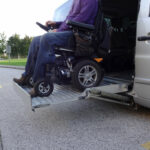
A vehicle lift is a mobility tool that helps individuals who use a wheelchair or a scooter. The scooter or wheelchair can be safely stored inside or outside the vehicle with little effort and transported to the destination for use by installing a vehicle lift in a van or on a vehicle. Being able to take a mobility device on the go is very helpful for people that would otherwise be homebound.  

There are a variety of vehicle lifts available for purchase. Rest assured the professionals at Next Day Access will help you choose the right lift for your needs. To ensure you get the best vehicle lift for your needs, here are three questions to ask before buying a vehicle lift. 

What type of lift do you need?

The type of vehicle lift you need will depend on several factors, but an essential element is what kind of vehicle you drive. It is good to research which lift is most compatible with your vehicle.

For example, if you have a van, the vehicle lift will differ from the vehicle lift for a sedan. You will also want to consider if you need more cargo space in the vehicle. If so, a Bruno Out-Sider Vehicle Lift may be a good option for you. 

Is the lift easy to operate and install?

At Next Day Access, we can install your vehicle lift quickly with little interruption to your daily activities. How your vehicle lift operates is up to you. You can choose between electric vehicle lifts or a manual vehicle lift. Each version has its benefits.

The electric version allows you to slide your mobility device onto the lift and have it lifted and secured with a button push. A manual lift uses a rolling mechanism where you manually roll the lift into its proper position. 

Is the vehicle lift ADA compliant?

What does it mean for a vehicle lift to be ADA compliant? According to the ADA or Americans with Disabilities Act website, this act was put in place to outline a specific set of standards that facilities, workplaces, and accommodations must obey.

Therefore, when a company is ADA compliant, the mobility devices they sell, including vehicle lifts, must meet ADA standards. These standards ensure that you are less likely to be injured using their products.

At Next Day Access, we are ADA compliant. If you have any questions about the Next Day Access vehicle lifts or any mobility or accessibility product, please do not hesitate to Nous contacter. Our experts have you covered from the most common questions to specific technical and safety details. 

When someone has a disability, getting into a pool can be a struggle and unsafe. Pool lifts are assistive aquatic access devices designed for people with disabilities or limited mobility who need help getting into a pool safely.

At Next Day Access, we offer a variety of Ascenseurs de piscine, and we understand deciding which lift is best for you can be confusing. Here are some tips on choosing the right pool lift for your home.

How To Choose a Pool Lift for Your Home

Portable or Fixed?

At times, customers prefer a pool lift that does not require permanent installation. In this case, a portable lift might be best since it can be stored or moved when not in.

If you would rather not worry have to store it, you would likely prefer a fixed pool lift. 

What type of disability support will you need?

If you have arthritis or a weakened lower body, you may not need a pool lift with foot and headrests. Most pool lifts are designed for people who lack a full range of motion or control of their limbs. We recommend a chair featuring an armrest, back, neck, and leg support along with a secure belting system. 

Weight Capacity

Any ADA-compliant pool lift must support a minimum of 300 pounds. You can, however, find pool lifts designed for bariatric use that will hold up to 450 pounds. 

Power Source

You have three options for operating your pool lift. You can opt for a manual lift with a hand crank, a hydraulic lift that harnesses the pool’s water pressure, or a battery-operated lift. 

The portable lift is always battery-operated due to its design. If you plug it into a power source between uses, you can recharge the battery. A properly cared for pool lift battery can last up to 5 years.

Aesthetics

You can find pool lifts in various styles, even stylish, sleek, and low-profile versions. People that want to keep their pool deck tranquil usually go for a sleeker pool lift.

Design details such as lift Installation permanence and rotating systems make a difference in the aesthetics of your lift. If an individual needs more support using the pool lift, consider the additional features you will need for the lift. 

Next Day Access has many options available to access your spa or pool. Our pool lifts are economical and ADA compliant with sleek, low-profile designs. Nous contacter today if you have additional questions and learn how to choose a pool lift or schedule an installation. 

When choosing to rent or buy a ramp the decision can be confusing. An important thing to consider is how long will you need the ramp? If you think you will need it for longer than 6 months many people choose to buy the ramp. If you have a temporary injury and will need the ramp for less than 6 months, you might consider renting the ramp rather than buying it. 

However, different situations call for unique solutions. We compiled a checklist of common ramp uses to better explain why you should choose whether to rent or purchase a ramp.

Rent a Ramp

  • If you are injured and will only need short-term rehabilitation. If doctors believe you will make a full recovery, you will likely only need a ramp temporarily, therefore renting is a better choice in this scenario. 
  • If you are renting your property, it might be better to rent the wheelchair ramp. Most landlords will not pay to have a wheelchair ramp installed on their property. 
  • An end-of-life or hospice situation. If you know your loved one or yourself only have a few more years or months renting is preferable. 
  • You have guests with mobility challenges coming to visit and you would like to accommodate them during their stay. 
  • You are planning a special event. Perhaps you are having a wedding at your home or a family reunion. Whatever the case may be, it will be nice for anyone with difficulty in mobility to enter the house safely.

Buy a Ramp

  • You might consider purchasing the ramp if it will be used for longer than 6 months. 
  • You or the one needing the ramp owns the property and would like to install a wheelchair ramp to make the home permanently accessible for years to come.

At Next Day Access, we offer a variety of wheelchair ramp styles for you to rent or buy, such as foldable ramps, aluminum ramps, weatherproof ramps, and more. We will deliver and install wheelchair ramps for both residential and commercial customers. You can Nous contacter for a quick quote. You will also receive a free estimate and financing is available if you choose to buy. 

Many family caregivers do not get proper training on transferring someone with mobility difficulties from one place to another. For example, one of the most common tasks is to help someone in a wheelchair move safely to a toilet. Thankfully, there are a handful of toilet transfer techniques to help you.

If you do not do the transfer correctly, you could injure yourself or your loved one. We found a few transfer tips from Daily Caring we would like to share with you.

4 Toilet Transfer Techniques for Family Caregivers

Prep the Space

  • Remove rugs, bathmats, or any other trip hazards in the bathroom in the space you need for transferring. 
  • Move the wheelchair feet out of the way. 
  • Have your body set to perform the transfer. 
  • Move the wheelchair into the proper position and lock the brakes. 

Help Them Up From the Wheelchair

  • Have your loved one scoot up to the edge of the wheelchair and lean forward. 
  • Ask them to either hold your forearms or put their hands on the arms of the wheelchair and push up. 
  • Stand directly in front of them, hold their waist and stand up together, keeping your body stiff and controlled. Use your knees to lower and raise your body. Do not bend over. Bending over is how you could injure your back. 
  • If their legs are not strong, put your knees in front of theirs while they stand. This is called blocking. 
  • If they are weaker on one side, stand on that side to provide additional support. 

Sit Them on the Toilet

  • Using small steps, guide them to pivot and turn 90 degrees and back up until the toilet seat is at the back of their knees. 
  • Help them pull down their pants and undergarments. 
  • Have them bend their knees and easily lower themselves down to the seat. Once again, use your knees to raise and lower your body to avoid injury. 
  • Consider investing in a Bio Bidet. Bio Bidet is known for having the best toilets and toilet seats for all homes. In addition, the cleansing method utilizing a water stream sets them apart from their competition. The Bio Bidet will help ensure that your loved one gets as clean as possible after using the restroom. 

Return to the Wheelchair

  • Get them to move forward on the toilet seat and lean towards you. 
  • Ask them to hold your forearms and push up. 
  • Stand close to them so you can hold on to their waist while you both stand.  
  • Using small steps helps them pivot 90 degrees again and back to the wheelchair. But, first, make sure the brakes are still locked on the wheelchair. 
  • Once they feel the wheelchair seat at the back of their legs, they slowly return to a seated position. You will need to hold their waist as they take a seat. 

Essential Safety Tips for Transfer

  • Never try to pull an older adult up. 
  • Bend from the waist. 
  • Do not let them hold on to towel bars or toilet paper holders, as these could be non-sturdy and cause them to slip. 
  • Make sure they do not hold you by the shoulders or the neck. This will help to prevent injury. 

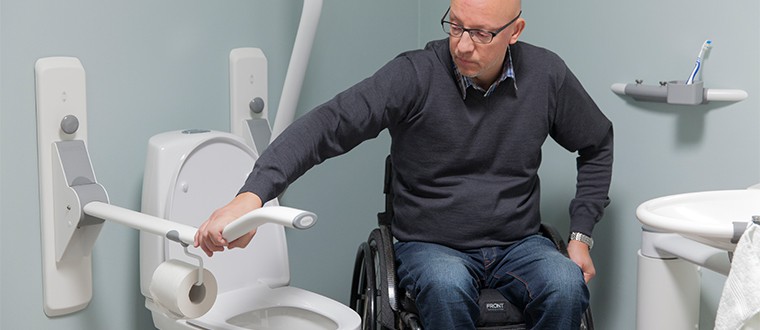
At Next Day Access, anyone with difficulty in mobility can find products to help keep them safe at home and on the go. For the bathroom specifically, we offer Toilet Support Arms, Grab Bars, Drive Commode Chairs, Bio Bidets, and more. Nous contacter to see the many ways we can help improve your life. 

Getting an older patient to bathe can be a struggle for many family caregivers. The biggest concerns are if they do not bathe, they could develop infections, produce a strong odor, or become aggravatingly itchy.

Harvard Health recommends showering or bathing at minimum several times a week. Here are a few tips for bathing aging adults to keep them healthy and clean while minimizing stress.

3 Tips for Bathing Aging Adults 

Make sure the environment is safe

  • Use a handheld shower device to avoid spraying them in the face. 
  • Make sure the bath water is at a comfortable temperature. 
  • Make sure these are Barres d'appui in the tub. Next Day Access offers an assortment of grab bars and can install them in the correct areas to help older adults feel steadier when they enter the bathroom. 
  • Use a shower chair to help aging adults that have trouble sitting in the tub. 
  • Keep the bathroom floor clean and dry to help avoid falls. 
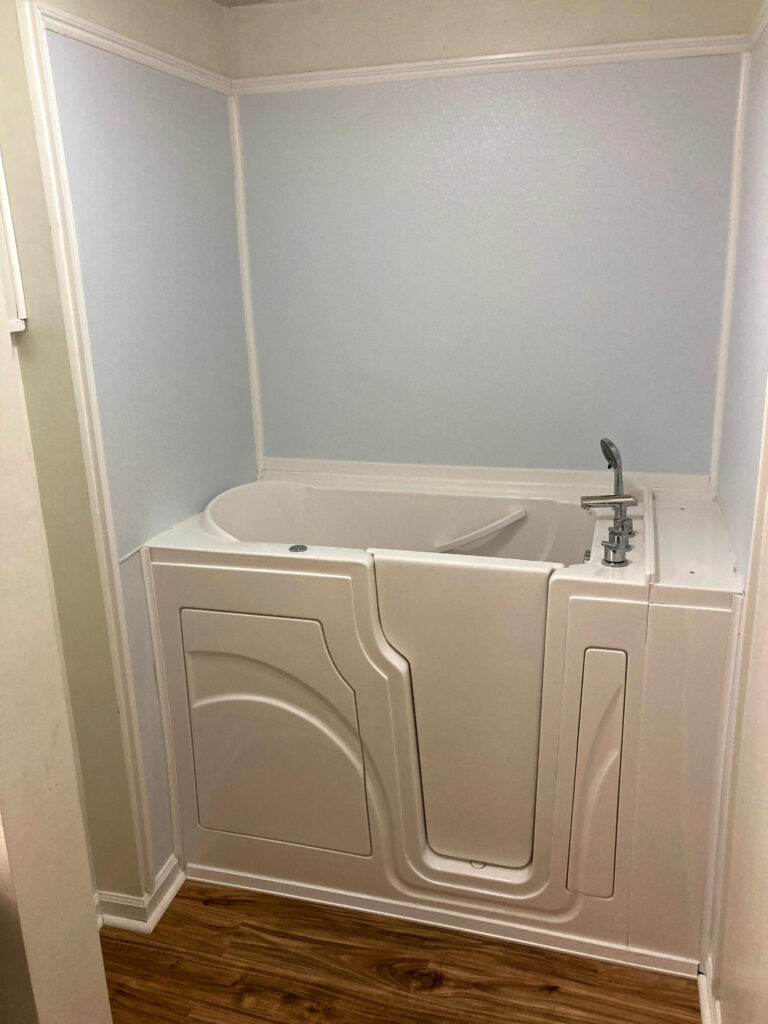
  • If your patient does not already have a walk-in tub speak to the family about the importance of installing one. Next Day Access has a conversion kit that can be installed quickly and makes it easier for aging adults to enter the tub.

Set up a portable shower for patients

There are several new ways to get a patient to bathe even if that means installing a portable shower in a room. With a portable shower, they can stay in their wheelchair and easily roll into the shower area.

The portable shower has its own drain and an easy set-up process. A portable shower could ease patients’ concern over bathroom safety, and they will likely be glad they do not have to leave their wheelchairs.

Consider opting for a sponge bath

Bathing and showering are the best ways to clean the body, but if this is not possible, a sponge bath is a good alternative solution. Here’s a helpful step-by-step guide on how to give a sponge bath. 

  • Gather all the supplies you will need and make sure your older adult is nice and warm. 
  • Start from the face and head and move down the body. Clean the private areas last. 
  • For privacy and warmth uncover only the body part that is being washed. 
  • Be sure to use gentle strokes. Remind yourself their skin is far more sensitive. 
  • Use a different washcloth for each area so you do not transfer dirt by using dirty washcloths. Remember, the goal is to get them as clean as they would get from an actual shower or bath. 

We hope these tips will help you have an easier time bathing your loved one or patient. At Next Day Access, we have everything you need to ensure aging adults living in place will feel safe not only in their bathroom but throughout the house. Nous contacter today for a complimentary in-home consultation. 

Cognitive decline, memory problems, and isolation issues are all problems that make aging adults vulnerable to mental health issues. According to the Center for Disease Control (CDC), a study of mental health in older adults ages 55 and older showed an estimated 20% of aging adults experience a form of mental health concern. The most common mental impairments include mood disorders such as depression or bipolar disorder, anxiety, or severe cognitive decline.

The CDC reports these conditions can cause impairments in physical health as well as mental health which can complicate the treatment of other disorders. It is usual for older adults to see mental health decline as they age, yet depression and anxiety are not regular parts of aging.

In addition to the possible clinical intervention in the form of prescribed medications or therapy, several resources and activities are available to help older adults feel engaged and in good mental health and spirits. Here are three tips to help aging adults boost their mental health. 

Tip 1: Stay connected and engaged.

When you stay connected and maintain meaningful, strong social connections with family and friends, it helps tremendously with mental health. There are many church groups for aging adults or other community events you can attend. The CDC says social support is associated with reduced risk of mental illness, physical illness, and even mortality. 

Tip 2: Play mind games.

The brain needs stimulation to stay sharp, just as the body needs physical activity to stay healthy. Keeping a sharp mind helps avoid cognitive decline as you age. An article in Harvard Health Publishing says, “Brain games can help sharpen certain thinking skills such as processing speed, planning skills, reaction time, decision-making, and short-term memory.” Some of the most accessible and common activities for aging adults include: 

  • Writing and reading 
  • Learning a new language 
  • Working a puzzle 
  • Playing Crossword or Sudoku brain games 
  • Learning to play an instrument 
  • Participating in trivia-style games- This could also be an outlet for making friends. Many restaurants now have trivia games, usually, once a week, where different trivia leagues compete against each other. You could join a league and make new friends while improving your cognitive health. 

Tip 3: Exercise

Many forms of exercise could boost your confidence while strengthening your mental and physical health. You could choose to go on daily walks, do low-impact yoga, swim, or even take up ballroom dancing. Joining a gym or your local YMCA would be an excellent opportunity for you to check out the classes they offer and meet new people. 

Not only does exercise have many physical benefits, but exercise also helps with managing stress, depression, and anxiety for aging adults. 

At Next Day Access, we care about aging adults. Our mission is to make you feel safe, independent, and comfortable at home or on the go. We do this by offering several different products like Rampes pour fauteuils roulants, vehicle lifts, scooters, Barres d'appui, and so much more. Nous contacter today and let us help improve your life. 

Avis des clients

FrançaisEspañolEnglish