Entrez votre terme de recherche ci-dessus.

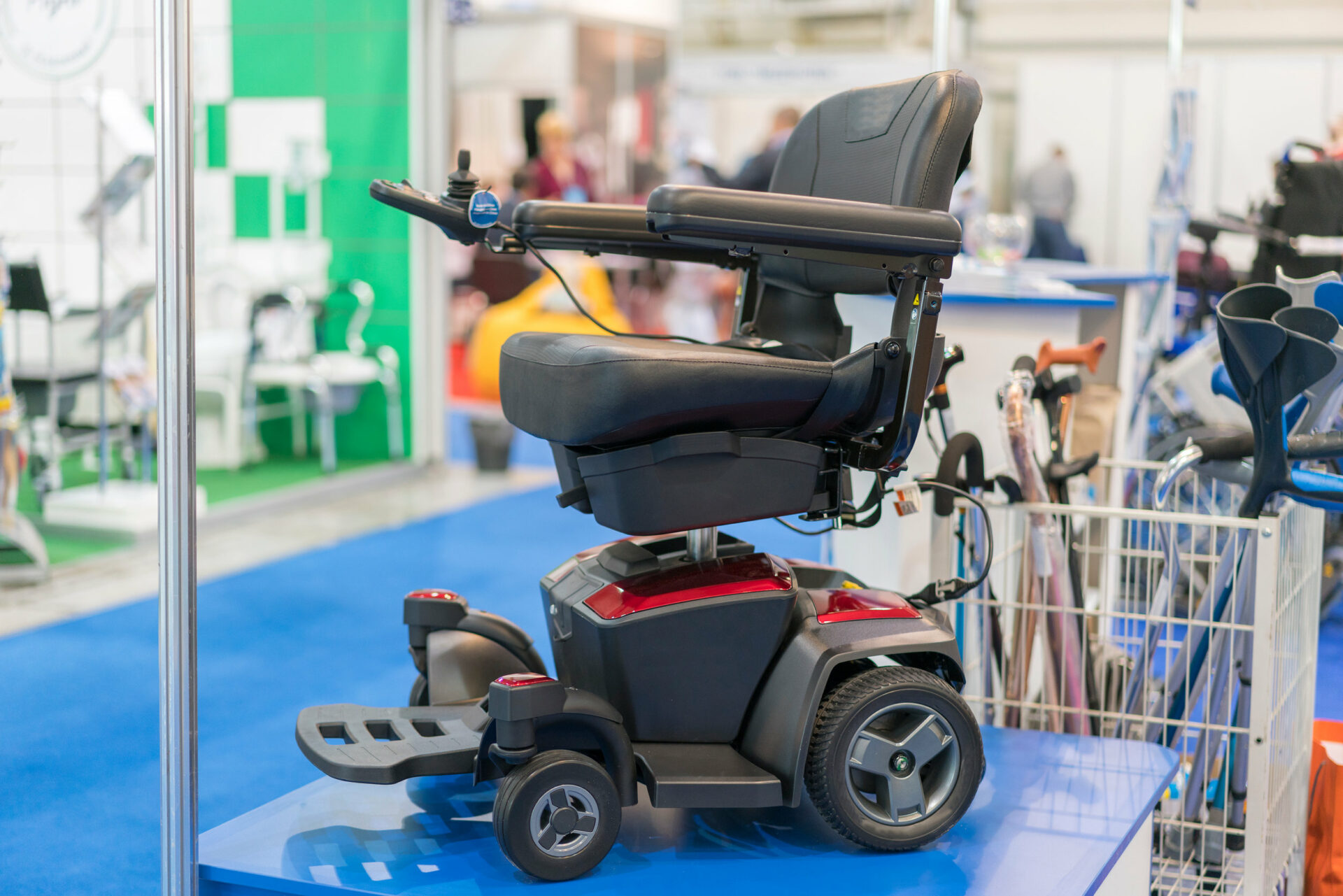
Today, there are close to 131 million people who use Fauteuils roulants to move around the world. Most rely on the same decades-old technology to get around. Despite all of the improvements wheelchairs make to the quality of people’s lives, little has changed about the wheelchair. At Next Day Access, we are excited about any new gadgets and devices that could enhance our customers’ lives, so we researched disability products for the future. Here are a few of the new inventions we hope to one-day hit markets. 

Self-Driving Wheelchairs 

In South Korea, a company, Guru IoT, is currently developing a self-driving wheelchair. The wheelchair can navigate through a crowd and avoid hurdles. It also has safety features like emergency braking and more. The newly developed self-driving wheelchair can hopefully solve many problems that people with limited mobility face. Often, the manual wheelchair can be hard to use for children below a certain height or adults with weak muscle power.

Smart Chairs 

Say hello to “Luci.” Luci is a wheelchair accessory that can transform power wheelchairs into intelligent chairs. The frame, which attaches to the mobility device has eight sensors. It can perform tasks like reducing speed or stopping to prevent accidents.

With safety being one of the top concerns, the development team at Luci ran a series of crash tests to measure the different types of impact caused to wheelchair users. During their tests they found that 87% of power wheelchair users reported only one trip or fall in the past three years. So, while it has some room for improvement, it does look exciting. 

3D Printed Carbon Fiber Wheelchairs

Medical 3D printing has allowed for a reinvention with wheelchairs. Phoenix Instinct, a mobility equipment supplier in Scotland has developed the Phoenix i. The Phoenix i is a lightweight, carbon fiber wheelchair. This new invention makes it easier to have more control in terrains and greater flexibility and stability.

The advancements in technology is exciting and hopeful. At Next Day Access, our goal is to help keep you safe and comfortable while aging-in-place. Nous contacter for a free in-home safety evaluation.
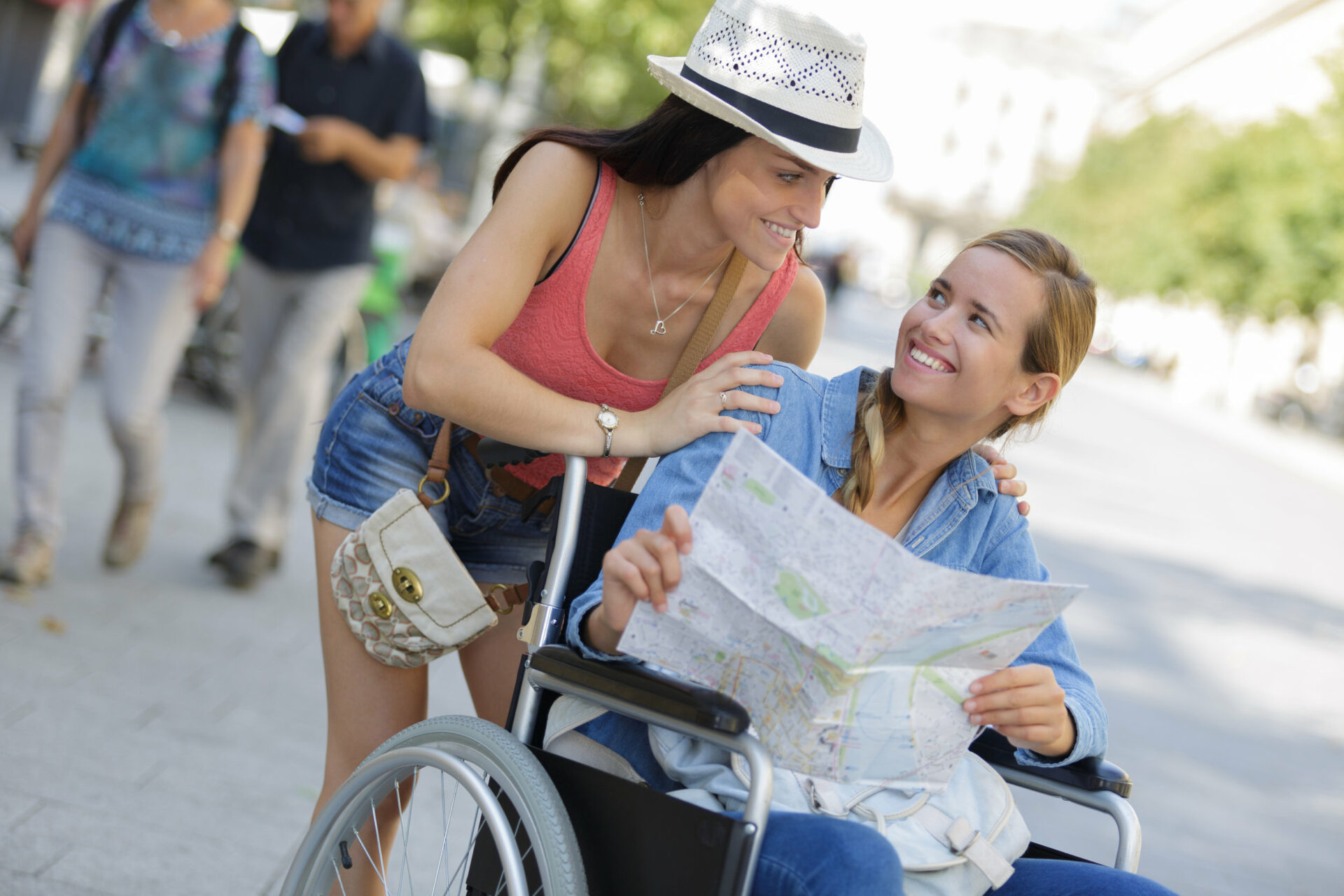
Travel regulations eased since the onset of the Covid Pandemic. Now, many people are taking advantage of the cheaper flights to Europe. Europe is a beautiful place to vacation with great history. Given the older architecture, not every place in Europe is equipped with accessibility laws in place. Which can present difficulties with navigating a wheelchair or other mobility devices. Successful traveling with a mobility device to Europe requires a lot of research and planning, but it’s worth it. Here are a few tips to consider so you can travel safely abroad. 

Accessibility laws 

The United Kingdom and Germany’s accessibility laws are similar to America with their requirements for buildings and transportation. Yet, many countries do not have these same laws. Before traveling to Europe, research which countries have requirements that help citizens with a disability.

Book hotels in advance

Many hotels have very few accessible hotel rooms, so booking hotels far in advance is ideal. When finding a hotel, try to stay in the most accessible parts of town. Look for towns that are not surrounded by hills or stairs. A good way to get an idea of the lay of the town is using Google Maps Street View.

Booking transportation online

In Europe, every training system has different boarding and booking procedures for mobility device users. Most times, you can book wheelchair spots online in advance. However, be aware that each line requires prior notification for a wheelchair reserved spot due to the low availability.

Accessible tour companies 

You can also find accessible tour companies. It is a great idea to book with a tour company, especially one that knows the ins and outs of traveling with mobility equipment. A company that specializes in accessibility tours will take you to the most convenient, smoothest, and shortest routes. It will alleviate a lot of stress when you know your accessibility needs are better met and understood. 

Lastly, enjoy your trip! You’ve done as much planning as you can, and now that’s left is exploring the European history, culture, and beautiful architecture. If you’re in need of a power chair, scooter, or other accessibility and mobility products to help you navigate through Europe, contact your local Next Day Access business.

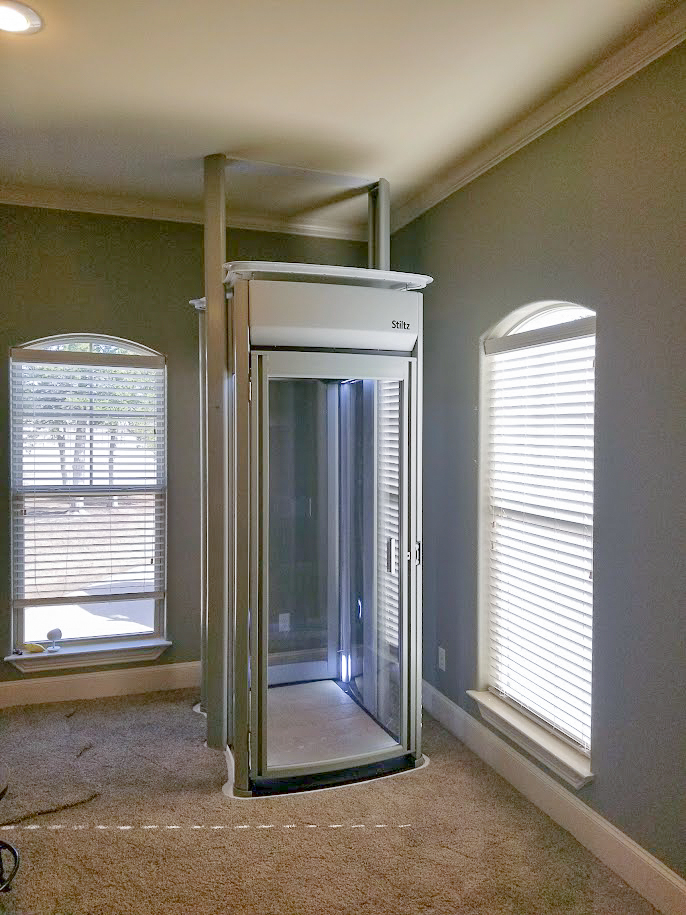
When you think of an elevator in a home, you may think of The Jetsons or another futuristic show. But believe it or not, having an elevator in the house is not as uncommon as you might think. When an aging loved one experiences limited mobility, going up and downstairs is no longer safe and easy.

That’s why you may consider a home elevator to can help you or your loved ones stay in their home when the stairs become a challenge.

When do home elevators qualify for your solution? 

Aging in place has become a large trend in the older population. Studies have found that most homeowners want to stay in their existing homes as they age. For some, selling a two-story or even three-story home and moving into a one-level home can become expensive and stressful.

Fortunately, home elevators have become a less expensive solution for people with limited mobility and looking to age comfortably in their home.

Benefits of Home Elevators

Convenience

It’s easy to overlook the many daily activities that could be challenging for people aging in place. Whether it’s tidying up each week from room to room or putting away laundry, there are many times that require going up and down the stairs. With a home elevator, it makes routine activities easier and more pleasant.

Comfort

The activity of climbing and descending stairs can put a strain on your muscles, ligaments, and cardiovascular system. Stairs are often risky for older adults. As our loved ages, chronic pain, inflexibility, or vision issues can lead to trouble with stairs.

To help avoid falling or serious injuries, a home elevator can give you peace of mind and make a comfortable and relaxing experience as your glide up and down the levels of your home.

Independence

Another and an essential reason to add a residential elevator is to maintain independence. As you or your loved one continues to age, limited mobility and medical issues will arise. A trip or a fall up or down the stairs can cause you or your loved one’s independence to decrease.

A home elevator can help you restore your independence and allow you to travel freely up and down the levels of your home.

At Next Day Access, our home elevators are safe, quiet, and customizable to your home. Whether you prefer a lavish look with mahogany and silver handrails or a hideaway elevator, the choice is up to you.

We have a large variety made by some of the best brands in the business, including Stiltz, Wessex, and Waupaca. Contact us today for a free in-home consultation.

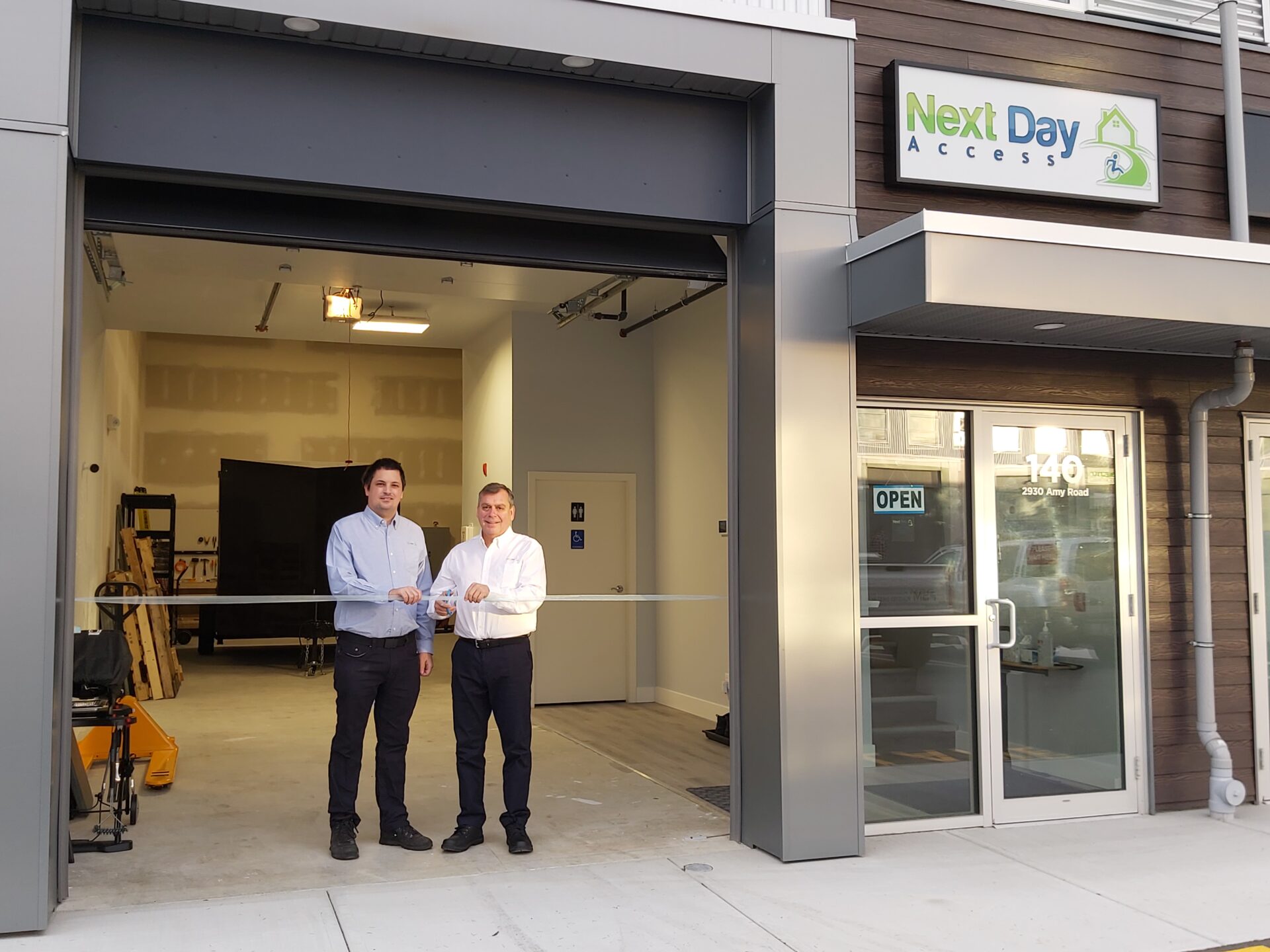
Next Day Access is pleased to announce the grand opening of its second Canada location in Langford, British Columbia. The Next Day Access Victoria, British Columbia franchise, which will provide accessibility and mobility solutions to Vancouver Island and the Sunshine Coast, is owned by Al Santos.

Next Day Access provides a variety of solutions to help people of all ages who have temporary or permanent injuries, veterans who have become disabled, and seniors aging in place. Some of the services include product installation, in-home safety consultations, home and bathroom modifications, rental, and rent-to-own programs for non-custom products. 

Santos brings many years of experience as an Advanced Care Paramedic in educational and managerial roles, spending most of his career in Canada and the Middle East. After over 30 years in paramedicine, he felt that he wanted to do more by providing accessibility and mobility solutions to customers with unique needs.

“Next Day Access is a natural fit for me. In my career, I saw many patients struggle to stay in their homes safely due to a lack of accessibility and mobility. I witnessed firsthand many injuries over the years that were in part caused by homes not being safely modified for changing health needs. I want to increase the quality of life for others by now hopefully being preemptive and preventing injuries,” says Santos. When asked why he chose the Next Day Access brand, he felt that the business and product offerings are a perfect fit to continue helping those in need enjoy the comfort of their home while being safe.

Anyone with mobility-related disabilities who may need a temporary or permanent solution or wishes to age in the comfort of their own home can now turn to a locally owned and operated business in Victoria, British Columbia, Canada. The new Next Day Access location is backed by a national brand they can trust to meet all their needs in an expert and professional manner. In addition to the British Columbia franchise, Next Day Access has additional locations in Canada and the United States.

We all know that walking is good for physical and mental health. But did you know that walking can keep your brain healthy and slow the progression of memory loss? A recent study found that middle-aged and older people with early signs of memory loss increased their cognitive health after they started walking frequently. This is because walking increases oxygen and blood flow to all parts of the body, including the brain.

What happens to our brains when we walk

If our brains receive more oxygen, that’s a good thing. According to Neuropeak Pro, our brains use about 20% of our body’s total oxygen supply, so if we don’t get enough oxygen up there, it’s easy to feel “foggy.”

Additionally, a third of our brain is made up of blood vessels. So with increased blood flow to the brain, there is better cognitive function, improved memory, and protection against decline.

Walking several times a week for 30 to 60 minutes can:

  • Keep thinking, reasoning and learning skills sharp
  • Improve memory and cognitive function for people with mild Alzheimer’s disease or mild cognitive impairment
  • Slow the progress of Alzheimer’s 
  • Increase the size of the part of the brain that’s associated with memory formation.

More research is needed to know how physical activity may improve memory. However, it is important to walk and exercise to stay healthy physically and mentally. At Next Day Access, our goal is to help you keep safe and comfortable while aging in place. We offer accessibility and mobility solutions for your home. Nous contacter to schedule a free home-assessment.

World Occupational Therapy Day is on Wednesday, octubre 27th of this year. This day was initially launched to celebrate and heighten the visibility of occupational therapy. The theme of this year’s celebration is “Belong. Be you.” This year’s theme promotes the power of diversity and inclusion as we work together to build community and resilience. 

What is Occupational Therapy? 

Occupational therapy teaches you how to adapt. After an illness or injury, tasks may not be as easy as they used to be, especially if the pain is involved. Your OT will set up a plan to improve the way you accomplish activities. They determine if you need to learn how to do things in a completely new way or if you need assistance with remembering how you once performed the task. If they notice the lesson is painful, they will help you figure out how to achieve your everyday activities with minimum pain.

People with the following struggles find enormous relief when they see an occupational therapist: 

  • Spinal cord injury 
  • Low vision  
  • Alzheimer’s disease 
  • Poor balance 
  • Cancer 
  • Diabetes 
  • Multiple sclerosis 
  • Cerebral palsy 
  • Mental health or behavioral issues 
  • Joint replacement 
  • New Injuries that change the way the patient will function through life 

Occupational Therapists Aid Seniors Choosing to Age in Place 

While Occupational Therapists excel at helping those with an injury, disability or illness, they can also help if you have an older loved one choosing to age in place. They can teach them how to adjust to daily life, whether it be bathing, dressing, or learning how to adapt to home modifications.

At Next Day Access, we are proud to aid occupational therapists when they need products for their patient’s homes. We have a wide variety of mobility equipment, home modifications, and accessibility products to help ensure that anyone living with a disability or aging in place is secure and comfortable at home. You can even Nous contacter for a free in-home consultation.  

Next Day Access is proud to announce the grand opening of a new franchise location in Toledo, Ohio. Jeff Rowe is the President/Owner of Next Day Access Northwest, Ohio. Next Day Access provides accessibility and mobility solutions to customers in local communities. The new location will focus on helping customers live independently and age-in-place by offering and installing wheelchair ramps, stairlifts, grab bars, bathroom safety, scooters, and more. 

Prior to becoming owner of Next Day Access Northwest, Rowe brings years of experience in sales in a variety of industries, from medical devices and pharmaceuticals to hospitality and material handling equipment. 

“I wanted to work more with end-users that sold products that would be life-changing for people,” says Rowe. When asked why he chose the Next Day Access brand, he said, “Next Day Access checked all the boxes I was looking for since it is a growing industry selling life-changing products. Once meeting the Home Office team, I knew they were good people, and our visions aligned perfectly.”

Anyone with mobility-related disabilities who may need a temporary or permanent solution or wishes to age in the comfort of their own home can now turn to a locally owned and operated business in Toledo, Ohio. The new Next Day Access location is backed by a national brand they can trust to meet all their needs in an expert and professional manner. In addition to the Northwest, Ohio area, Next Day Access has locations in the United States and Canada.

Research suggests that listening or singing songs can provide emotional and behavioral benefits for people with Alzheimer’s disease and other types of dementia. The reason being is that the brain area linked to musical memory is undamaged by Alzheimer’s. It has been proven that music aids in relieving stress, reducing anxiety and depression, mildly improving memory loss, and calming agitated patients. It can also provide a way for caregivers to connect with loved ones suffering from Alzheimer’s who have difficulty communicating. 

This type of therapy has been proven to bring patients who have dementia to a better place cognitively and emotionally. There are many more reasons for music therapy than just its ability to help with memory loss. Others include:  
  • Treatment for pain management 
  • Physical issues involving gross motor skills or fine motor skills processing grief 
  • Strengthening respiratory function 
  • Stress management  
  • Physical and cognitive health issues
If you would like to use music to help a loved one who has Alzheimer’s disease, consider these tips: 
  • Think about your loved one’s taste in music. What music brings back memories of happy times in your loved one’s life? Involve family by asking them to suggest songs to make playlists. 
  • Set a mood with your choice of music. Play music or sing a soothing song to calm your loved one during mealtime or a morning hygiene routine. When you would like to encourage and excite your loved one’s mood, then you can choose more upbeat music. 
  • Avoid overstimulation. When playing music, diminish competing noises if possible.  
  • Encourage movement. Help your loved ones to clap along or tap their feet to the beat.  
  • Sing along. Singing along to music with your loved ones can enhance the mood and strengthen their trust in you. Some early studies also suggest singing can help stimulate unique memories. 
  • Pay attention to your loved one’s response. If your loved one enjoys certain songs, play them often. If your loved one reacts negatively to a particular piece or type of music, change the song right away. 

While the disease currently has no cure, others focus on different ways to improve a patient’s quality of life. Music offers many benefits for Alzheimer’s patients in varying stages of the disease. At Next Day Access, the primary goal is to provide your aging loved one with a comfortable home that is safe and secure. We specialize in making sure your home has all the home modifications in place to keep your loved one happy at home. Nous contacter to schedule an in-home consultation.  

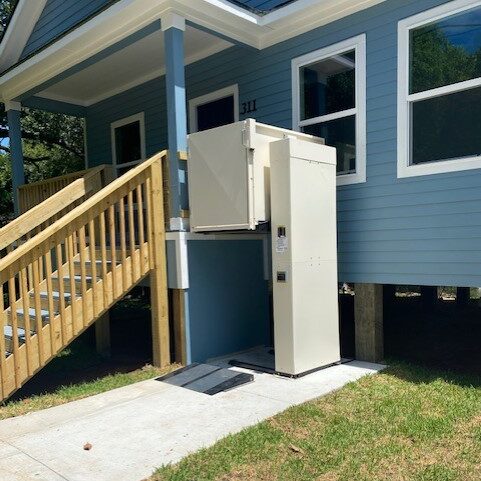
Even though porch season is winding down, we wanted to share with our readers how convenient and efficient a porch lift, also known as a vertical platform lift (VPL) can be for people with limited mobility. A porch lift is a cost-effective solution to gaining access to reach raised porches, decks, and other elevated areas for wheelchair, power chair, and other mobility devices.

Often when there is not enough space for a ramp, porch lifts can be a solution. Here are a few reasons you might decide if one is suitable for you. 

Less Space Than a Ramp

Trying to decide whether you need a ramp or a lift? How much space do you have? A porch lift will require a 5′ by 7′ area regardless of the rise. A ramp’s size will increase with every step.

The Americans with Disabilities Act (ADA) gives guidelines for ramps. It is a good reference point for ramp slope and length. At a residential home, the standards are different, but for public property, the ADA Standards require a 1:12 slope ratio or 4.8-degree slope.

That requires for every inch that rises, an additional foot is added to the ramp length. For example, if an entrance has three steps with a 7″ riser per step, it will require a 21′ ramp.

Although these calculations were based on a public space, it shows just how significant a ramp is compared to a porch lift. If your space is small at home, a porch lift can be a better use of space than a ramp. 

Simple and Safe Without Assistance 

Of course, there can be safety concerns with any moving platform. However, with a porch lift, you do not need to be dependent on a caregiver. If your mobility allows you to hold down the lever or button, you can operate a porch lift and thus be able to come and go as you please. 

It Works in Weather Conditions and Requires Little Maintenance.

Porch lifts can withstand weather conditions. If temperatures consistently drop below freezing in the area where you live, consider a cold-weather package to ensure your lift will run smoothly on frigid days. It is recommended to have your porch lift serviced annually to help avoid malfunctions. 

At Next Day Access, we are proud to sell, install, and service porch lifts. Our company goal is to provide products for our customers that give them more independence, keep them safer and more comfortable at home. Nous contacter to schedule a free in-home consultation to help you ensure your home is accessible as it can be.  

Have you reached the point in life where it is time to take care of the parents or grandparents that once took care of you? As your loved ones grow older, they often need help with small tasks like picking up groceries, making health-related decisions, or bathing. Whatever their needs may be, it is essential to be supportive and not overbearing. Here are a few steps to help guide you as you navigate supporting an aging loved one. 

Step 1: Assess Their Needs 

Assessing your loved one’s needs is most important when learning to be supportive rather than making them feel like they have not lost their independence. Experts recommend considering the following issues seniors often face to help you better assess their needs:

  • Family support 
  • Home safety 
  • Medical needs 
  • Cognitive health 
  • Mobility
  • Personal hygiene 
  • Meal preparation 
  • Social interaction 

How well do they handle each area listed above? Try to monitor their ability to address each of these areas on their own. Regarding family support, is there another family that can help? If so, it is an innovative idea for you to keep a family notebook. In this notebook, you can share with family when you notice they might lack the ability to care for themselves or are unsafe. You can work together to make the necessary changes.  

Step 2: Be Financially Prepared 

As parents or loved ones grow older, they may need help managing finances. While having conversations about money can be awkward, and some may want to avoid it, discussing it now can help prepare for the future. You can start the conversation by asking about essential documents, gathering information about accounts and key contacts, and helping with deciding long-term plans. If you talk to your loved ones now, it will give them more control over financial decisions, so you aren’t overwhelmed with what they would want in an emergency.

Step 3: Install Home Modifications 

To avoid your loved one from sustaining an injury in their home, having accessibility experts evaluate their home for any safety concerns is essential. Older adults fall easier, and a fall can cause injuries or even death. With home modifications, such as Barres d'appui or stairlifts, your loved one can live comfortably and safely at home.

It is a noble endeavor to take on someone else’s needs. It can sometimes feel daunting, yet if you have a plan, you will be more capable of meeting your loved one’s needs. Next Day Access is here to help. Next Day Access can assist you with determining the home modifications you will need to ensure your loved one stays as safe as possible. Nous contacter for a free in-home consultation. 

Avis des clients

FrançaisEspañolEnglish