Enter your search term above.

When most people fall, it is common to get a bruise or scrape. However, if an older adult falls, the results are far worse, causing broken bones, head injuries, or worse. It is common for older adults to fall more frequently because of lower body weakness, difficulties with walking and balance, or vision problems. Studies show one out of every four Americans over the age of 65 experiences a fall each year.

There are many ways an older adult could slip and fall, but one of the biggest causes is misstepping. At most senior living facilities, you won’t find stairs, but what if your aging loved one wants to stay at home where stairs are inevitable? Fortunately, there are many ways to make your loved one’s home safe, even if stairs are present. 

How to Make Stairs Safer for Seniors Aging in Place:

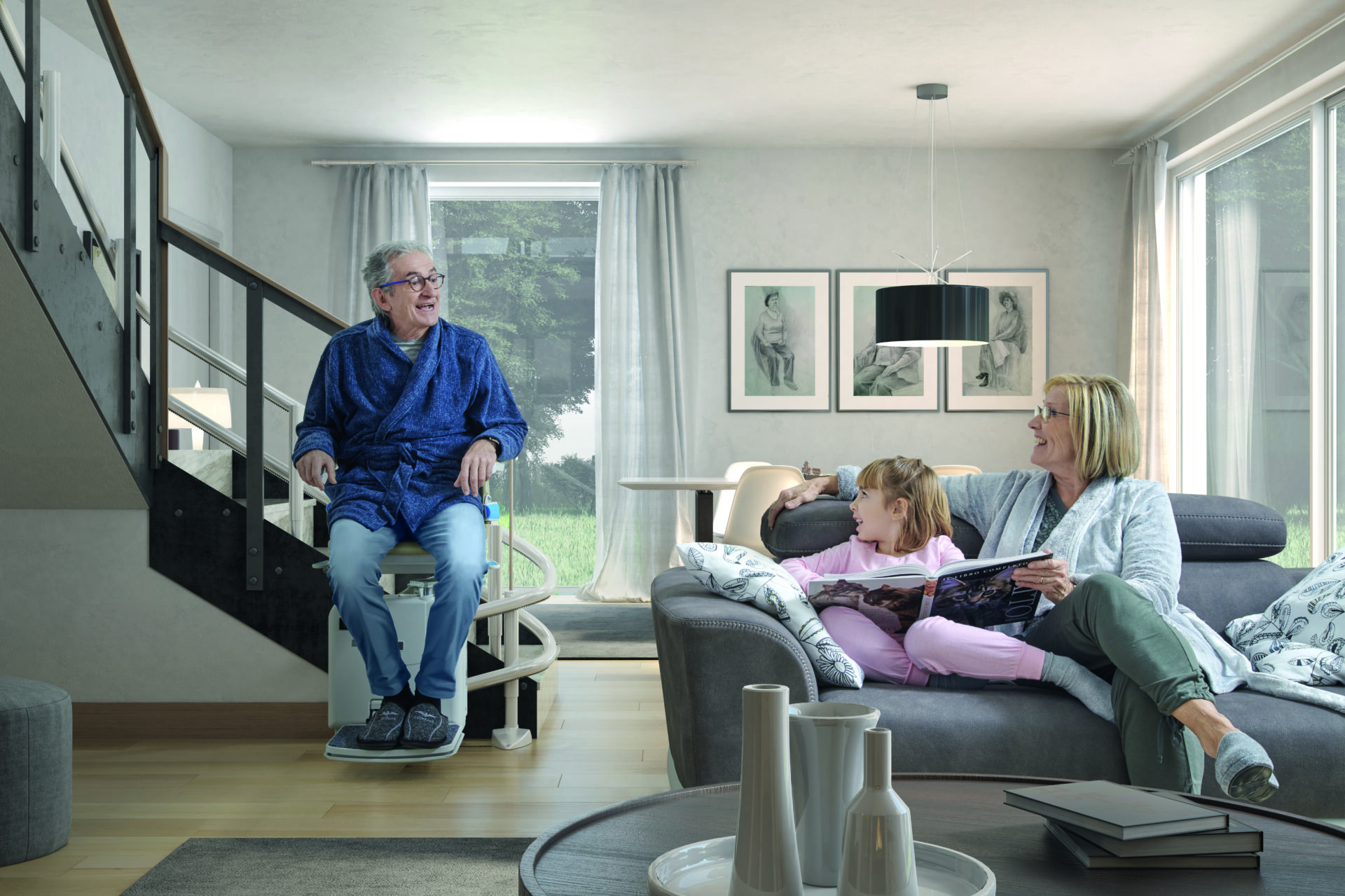
  • Invest in a stairlift. At Next Day Access, we offer an assortment of stairlifts. Our stairlifts safely help your loved ones go up and down the stairs. Stairlifts are easy to use and can be installed within hours to a day, depending on your staircase.
  • Add non-slip strips. These strips can easily be applied with adhesive to the stairs. You could even apply them in areas of the bathroom that could get wet and slippery.  
  • Try to decrease stair time. Is it possible to reorganize the home where your loved one never needs to go to the second floor? Could their bedroom be on the lower level? You may not be able to cut out stair time entirely, but if you limit the amount of time your loved one spends on stairs, it may reduce the likelihood of falling.
  • Add hand railings to the stairs. If you do not have a set of sturdy hand railings on the stairs you should invest in them as soon as possible. The CDC even recommends have railings on staircases. Railings help with balance and support, reducing the chances of falling.
  • Do not use a carpet runner on stairs. Having a leveled floor is one of the best ways to ensure safety in your home. Although a runner is decorative for stairs, it can be a trip hazard for older adults. If you can avoid using rugs, it can help your loved one keep safe from tripping and falling.
  • Invest in ramps for outdoors stairs or single steps. Ramps come in all sizes and can be installed usually in less than a day. Next Day Access has a variety of ramps to fit your unique needs whether it be an outdoor or indoor ramp.

At Next Day Access, we provide, sell, and install accessibility and mobility solutions to keep your aging loved one safe and comfortable at home. We understand the danger of stairs for seniors and have many different products to help them navigate a home with stairs. Contact us to schedule your free in-home consultation. 
Source: https://www.cdc.gov/falls/facts.html

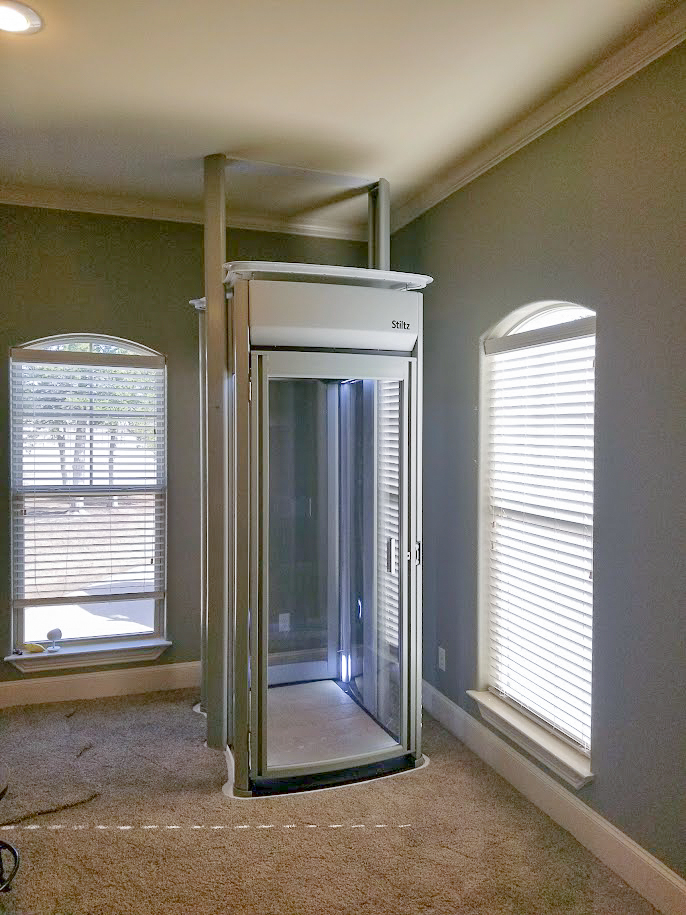
When you think of an elevator in a home, you may think of The Jetsons or another futuristic show. But believe it or not, having an elevator in the house is not as uncommon as you might think. When an aging loved one experiences limited mobility, going up and downstairs is no longer safe and easy.

That’s why you may consider a home elevator to can help you or your loved ones stay in their home when the stairs become a challenge.

When do home elevators qualify for your solution? 

Aging in place has become a large trend in the older population. Studies have found that most homeowners want to stay in their existing homes as they age. For some, selling a two-story or even three-story home and moving into a one-level home can become expensive and stressful.

Fortunately, home elevators have become a less expensive solution for people with limited mobility and looking to age comfortably in their home.

Benefits of Home Elevators

Convenience

It’s easy to overlook the many daily activities that could be challenging for people aging in place. Whether it’s tidying up each week from room to room or putting away laundry, there are many times that require going up and down the stairs. With a home elevator, it makes routine activities easier and more pleasant.

Comfort

The activity of climbing and descending stairs can put a strain on your muscles, ligaments, and cardiovascular system. Stairs are often risky for older adults. As our loved ages, chronic pain, inflexibility, or vision issues can lead to trouble with stairs.

To help avoid falling or serious injuries, a home elevator can give you peace of mind and make a comfortable and relaxing experience as your glide up and down the levels of your home.

Independence

Another and an essential reason to add a residential elevator is to maintain independence. As you or your loved one continues to age, limited mobility and medical issues will arise. A trip or a fall up or down the stairs can cause you or your loved one’s independence to decrease.

A home elevator can help you restore your independence and allow you to travel freely up and down the levels of your home.

At Next Day Access, our home elevators are safe, quiet, and customizable to your home. Whether you prefer a lavish look with mahogany and silver handrails or a hideaway elevator, the choice is up to you.

We have a large variety made by some of the best brands in the business, including Stiltz, Wessex, and Waupaca. Contact us today for a free in-home consultation.

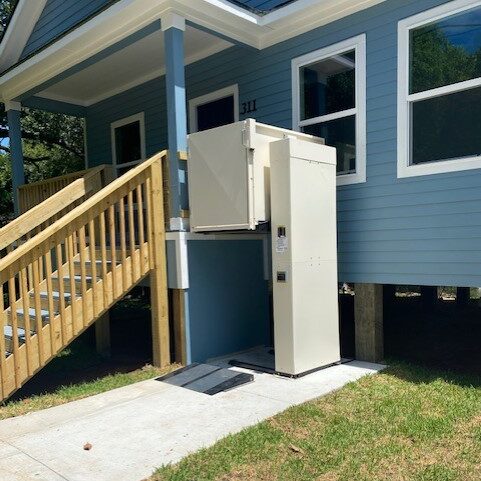
Even though porch season is winding down, we wanted to share with our readers how convenient and efficient a porch lift, also known as a vertical platform lift (VPL) can be for people with limited mobility. A porch lift is a cost-effective solution to gaining access to reach raised porches, decks, and other elevated areas for wheelchair, power chair, and other mobility devices.

Often when there is not enough space for a ramp, porch lifts can be a solution. Here are a few reasons you might decide if one is suitable for you. 

Less Space Than a Ramp

Trying to decide whether you need a ramp or a lift? How much space do you have? A porch lift will require a 5′ by 7′ area regardless of the rise. A ramp’s size will increase with every step.

The Americans with Disabilities Act (ADA) gives guidelines for ramps. It is a good reference point for ramp slope and length. At a residential home, the standards are different, but for public property, the ADA Standards require a 1:12 slope ratio or 4.8-degree slope.

That requires for every inch that rises, an additional foot is added to the ramp length. For example, if an entrance has three steps with a 7″ riser per step, it will require a 21′ ramp.

Although these calculations were based on a public space, it shows just how significant a ramp is compared to a porch lift. If your space is small at home, a porch lift can be a better use of space than a ramp. 

Simple and Safe Without Assistance 

Of course, there can be safety concerns with any moving platform. However, with a porch lift, you do not need to be dependent on a caregiver. If your mobility allows you to hold down the lever or button, you can operate a porch lift and thus be able to come and go as you please. 

It Works in Weather Conditions and Requires Little Maintenance.

Porch lifts can withstand weather conditions. If temperatures consistently drop below freezing in the area where you live, consider a cold-weather package to ensure your lift will run smoothly on frigid days. It is recommended to have your porch lift serviced annually to help avoid malfunctions. 

At Next Day Access, we are proud to sell, install, and service porch lifts. Our company goal is to provide products for our customers that give them more independence, keep them safer and more comfortable at home. Contact us to schedule a free in-home consultation to help you ensure your home is accessible as it can be.  

Making a tiny bathroom accessible may seem impossible, but you can do it with some creativity. There are so many design options these days that you can easily create a tiny bathroom accessible while also being sleek and stylish. Here are a few tips to get you started with designing an accessible bathroom for a small space. 

Change the Door 

Most people with limited mobility may say that a barn style or sliding door is preferable over a swinging door. Maneuvering around a traditional swing-in or swing- outdoor can be difficult when turning a wheelchair. It is also a clever idea to widen the doorway. A wider opening is hassle-free and safer for anyone using a mobility device.  

Remove the Tub and Shower Enclosure 

Believe it or not, you can still shower in the bathroom if you tile the entire bathroom floor and set up proper drainage. Once you install an adjustable handheld shower, you can use large glass panels or huge shower curtains to contain the shower spray. Other options could be a walk-in tub or a bathtub modification kit. The kit allows you to turn any tub into a walk-in shower, creating a safer maneuver into the shower. 

Install a Smaller Sink 

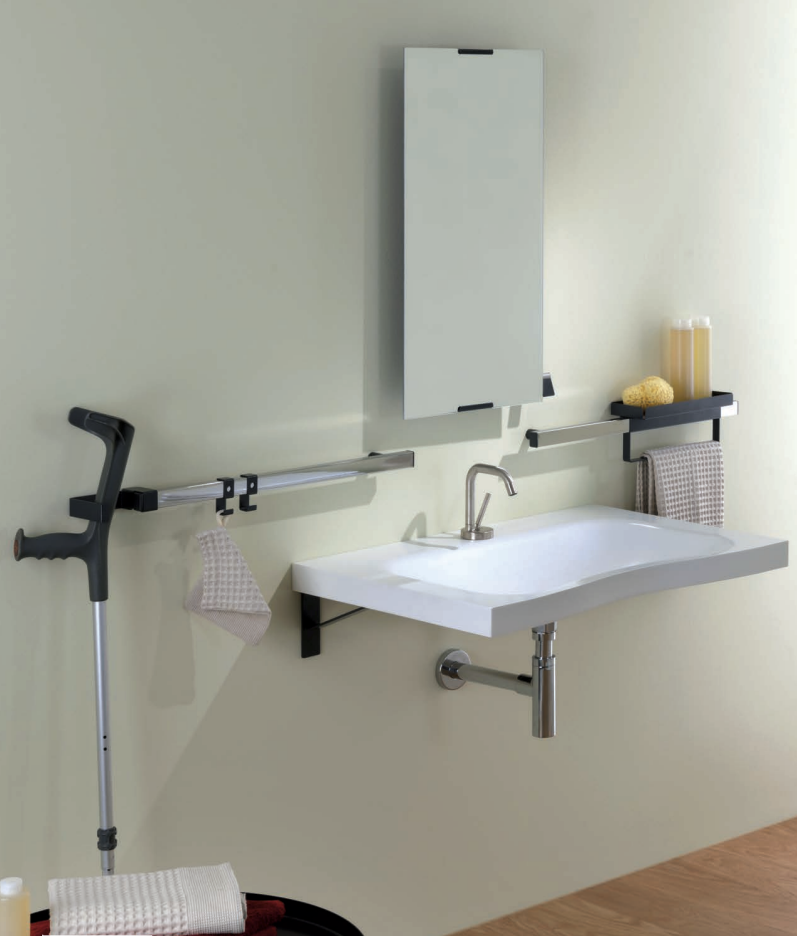
A sink with a shallow basin at wheelchair height is ideal. When creating an accessible sink, allowing space for the wheelchair user to slide under is ideal. Think slim when choosing a sink. You can get one with counter space but leave the bottom area open. For a tiny bathroom, your sink needs to be small and as tucked away as possible. 

At Next Day Access, our goal is to help provide accessibility or mobility solutions to individuals with limited mobility or caregivers to help create a safer and more comfortable lifestyle. Our experts can help you design an accessible bathroom, even if space is an issue. Contact us today to schedule a free in-home evaluation.

A typical closet design can be frustrating if you have limited mobility. A custom closet layout will help your mornings be more convenient and help with your mental health. You will be able to get the most from your space and quickly get to those hard-to-reach items. Here are five steps to get you started on achieving more closet accessibility.

5 Closet Accessibility Ideas For Your Aging Loved Ones

1. Change Out the Doors 

The very first step you will want to take is investing in sliding doors for your closet. A traditional swinging door can make it harder to navigate in and out of space. Also, make sure the knobs to push the sliding door open are low enough that you can reach them comfortably. 

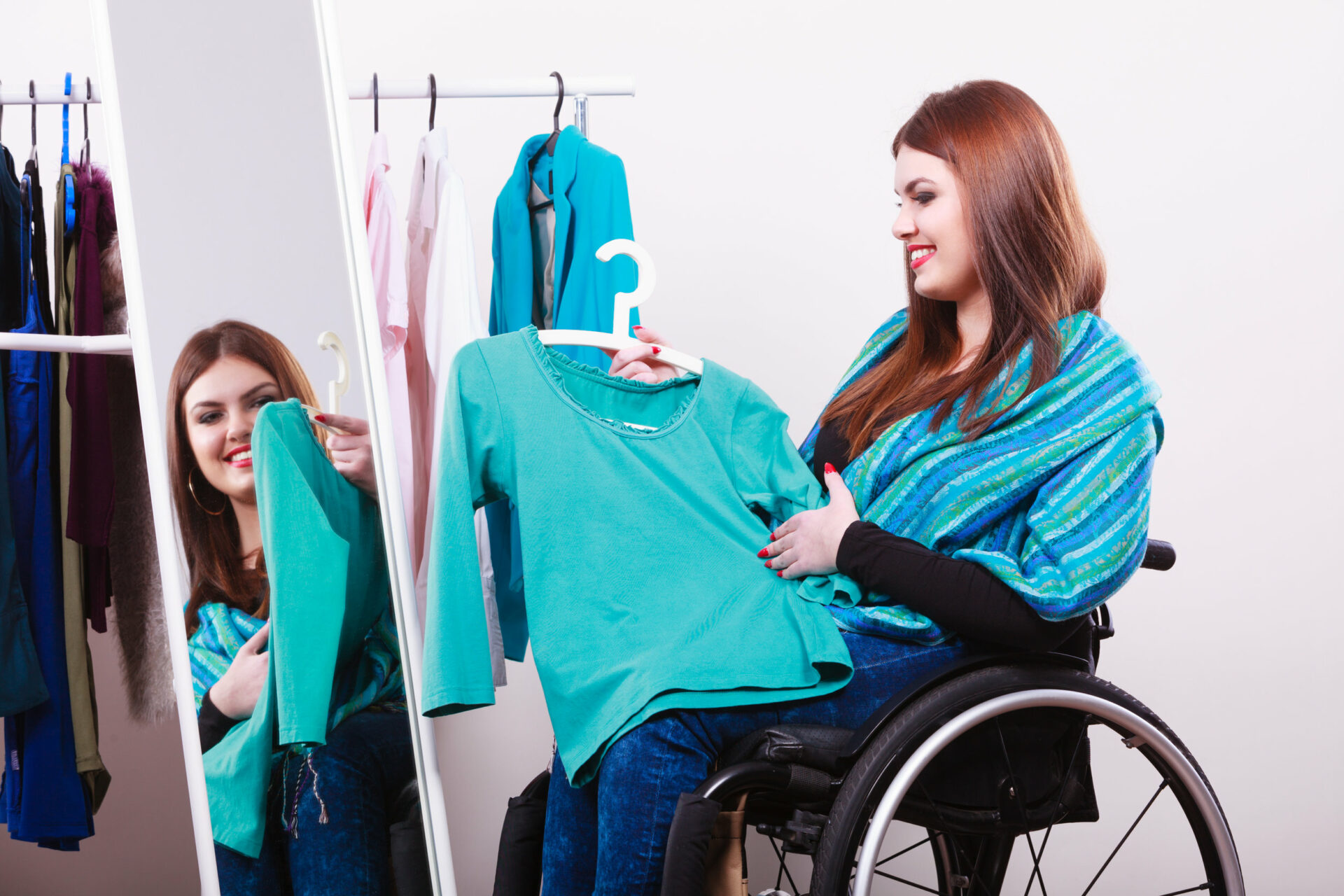
2. Hang Two Closet Rods 

When using two closet rods (an upper and lower one), with the lower rod 30″ off the ground, the lower rod placement will be easier if you’re in a wheelchair; this can help reach items without causing strain. For the special occasion garments, they can go on the top rod. When you need your special occasion garments, you can use a pull-down closet rod, which will conveniently bring your clothes down to you. 

3. For Dressers, Think Deep 

Dressers are great for storage space, especially if the dressers are deep rather than narrow. If you’re in a wheelchair the size and placement of drawers matters.  If the drawers are deep the user can store more with less hassle. It is recommended that dressers sit at a height of 33” off the ground to get the most ideal leverage.  

4. Incorporate a Lazy Susan into your Closet 

Yes, the same Lazy Susan one might see in a kitchen. A Lazy Susan is helpful because of its rotation. You will no longer have to reach deep into your closet to achieve your favorite bag. A Lazy Susan is perfect for accessories or even shoes. 

5. Look into Slide Out Storage Features 

When you have limited mobility, slide-out storage features should be a feature of your accessible closet design. Even a laundry hamper would work perfectly. As you need to dispose of dirty clothes, pull the hamper out, throw in the clothes and push the hamper back into its original storage area. Of course, this will also help when it is time to wash your clothes. Just unhook the hamper from its sliding rod, and you are ready to start washing. 

At Next Day Access, our goal is to help anyone with limited mobility feel comfortable and safe at home. With one call, we can do an in-home evaluation to help you identify any area in your home where modifications can help you stay longer in your home. Contact us today for all your accessibility and mobility needs.  

Designing a home that is inviting, safe and comfortable is essential for well-being. Of all places, your home should be a haven. For people depending on a wheelchair, unnecessary barriers and limited space can be very frustrating. Fortunately, you can make your home more accessible with these three tips for designing an accessible home.  

Simple Tips for Designing an Accessible Home For You or Your Loved Ones

1. Open Up the Space  

When you need to create more space in your home, it is simple; less is more. Try to see the space from the perspective of everyone who needs to use it. Look over your room for any unnecessary boundaries or clutter areas.

Does your sofa really need to block the hallway? Do you need a side table beside the couch? For a wheelchair to make a smooth U-turn, it needs about 78 inches of turn-around space. A minimum of 32 inches between each piece of furniture and the pathways can allow for easy movement. Keep that in mind when planning your furniture layout.

Carry the open floor plan idea throughout the house. Do you need an island in the kitchen that will create a narrow pathway?  Most of all, remember décor options are limitless, if they are pleasing to the eye and practical for the safety and convenience of all who use the space.

2. Think About the Flooring 

Making your home accessible can be overwhelming. That’s why we recommend starting from the bottom up. Remove mats or rugs that could get snagged in a wheelchair. Consider hardwood floors or laminate tile floors are ideal as they help wheelchairs roll easily.

If you cannot have a flat surface throughout the home, look into threshold ramps that make navigating oversteps much easier for wheelchair users. 

3. Find the Right Furniture 

For seating and storage, consider sofas with an attached chaise lounge, so you have plenty of room for pillows and therapeutic assists. Furniture that serves dual purposes is practical. For example, a coffee table that lifts or an ottoman with a storage compartment is perfect for functionality.

You can also get lift chairs that function like any other chair but support people with limited mobility. Lift chairs can help with getting in and out of the chair. Make sure that each piece of furniture is sturdy. Shelves or bookcases that could tip easily are dangerous. Look for pieces that are well built with a good center of gravity to avoid injury.  

At Next Day Access, we specialize in accessibility and mobility equipment for the home. From wheelchair ramps to grab bars, we have a variety of products to make your home comfortable and safe for you. Contact us today to schedule an in-home consultation. 

When you or your aging loved one decides to age in place, creating a safe and comfortable home is essential. As seniors age, their mobility decreases, and there is a higher risk of falling. The home must have home aging in place modifications to help prevent injuries. Here is a list of six simple yet effective home modifications.

Installing Grab Bars or Hand Rails

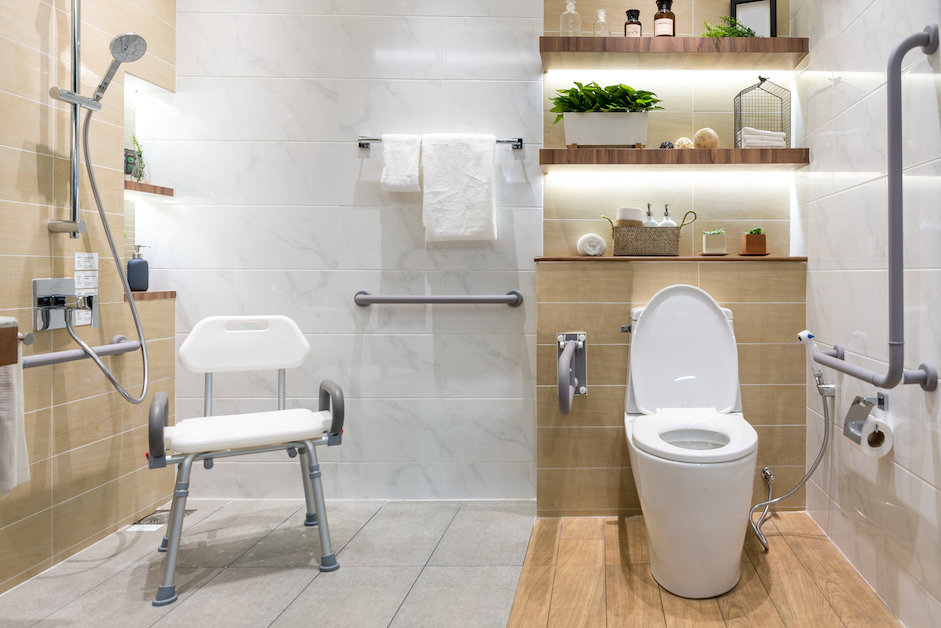
Installing grab bars or railings in high-risk slippery areas, like the bathroom, can provide better support. Grab bars are typically installed near the shower or tub area and near the toilet. However, grab bars or railings can also be installed along hallways and staircases. These home modifications can give seniors more support maneuvering around the home.  

Add Slip Resistant Mats to Tubs and Floors 

In addition to grab bars, adding slip resistant mats or even slip resistant stickers, depending on mobility, to tubs and bathroom floors can help prevent falling. This can be the simplest yet also efficient way to prevent falling.

Quick Tub Conversions

Quick tub conversions turn your existing bathtub into a step-in shower while still maintaining a fully functional bathtub. Stepping in and out of the bathtub can be a slip hazard for older adults.  

Threshold Ramps

A threshold ramp is a simple and safe way to help wheelchairs or other mobility devices to cross over rough surfaces. The slightly-inclined platforms makes it easy to cross over raised landings, doorways, or curbs.

Replace the Hardware on Door Handles and Cabinets  

Replacing round doorknobs with lever-style handles can help people with arthritis or grip issues easily open doors. Likewise, swapping out round kitchen cabinet doorknobs with lever-style handles or bar handles makes accessing kitchen items a breeze. Small knobs, like those commonly found on kitchen cabinets, can be hard to grasp for people that struggle with dexterity.  

Add More Light Fixtures 

There are many ways to bring more light into the home. You can put nightlights in the hallway, tap-lights under cabinets, or lamps on tables. This will aid your loved ones in seeing where they are going, which can help prevent any trips or falls. 

At Next Day Access, we offer solutions for home modifications. Our goal is to provide various solutions to help prepare a home for aging in place. Some of the additional services we provide include product installation services (for big or small jobs), in-home safety consultations, rental, and rent-to-own programs for non-custom products, as well as financing options. If you or a loved one is in need of our services or products, contact us today. 

According to a recent study, 90 percent of seniors over age 65 would prefer to stay at home rather than move into a nursing home. These days aging in place statistics are on the rise. It’s more doable than it has been in the past so more seniors are considering aging in place a real possibility.

An Abundance of Seniors 

The United States has seen unprecedented population growth among adults aged 65 and older. Studies show that Americans ages 65 and older will double from 52 million in 2018 to 95 million by 2060. The group’s share of the total population will rise from 16 percent to 23 percent.

Overcrowding of nursing homes will be a significant problem in the future. Along with overcrowding, there are many other reasons people are choosing to invest in home modifications rather than relying on nursing homes.

Rising Cost of Nursing Homes and Assisted Living Facilities 

One of the many reasons people choose their loved ones to age-in-place is that nursing homes and assisted living facilities are expensive. The general cost of a semi-private room in most nursing homes in 2016 was $6,844 a month.

According to the U.S. Census Bureau, the average household income in 2014 was $73,000. The cost of the semi-private rooms equals $82,000 a year. Usually, a senior is allowed to keep their home on Medicare.

However, if Medicare pays for any nursing home fees, they will put a lien on their home. You cannot sell the home until the lien is paid in full.

Medicare Pace Program 

In some places Medicare Pace Program is available. The program can help cover the expenses of seniors aging in place if a nurse or caretaker is needed. To receive this aid, a doctor must declare the senior as homebound, according to Medicare definitions.

If they do not meet the qualifications, hiring a caretaker from a health aid service company can be cheaper. Health aide services average around $20.50 an hour. For non-medical services, it runs about $20 an hour.

 Injured Seniors Study

The risk of seniors falling is huge. With home modifications, a senior living at home could save millions of dollars in hospital fees. Researchers Michael Eriksen and Gary Engelhardt found that 3 million Americans ages 65 and older are treated for falls annually, causing 800,000 hospitalizations.

They found that the falls resulted in 300,000 hip fractures. The hospitalization cost is about $33,000 per stay. The annual cost is about $55 billion (about $170 per person in the US.) The researchers suggest an inexpensive fix: in-home modifications reduce the incidence of falls by 50%. 

Home Modifications at Next Day Access 

Next Day Access has a variety of home modification solutions to help seniors age in place safely and comfortably. We offer an in-home consultation at no cost to you. With a list of recommendations on solutions, we can help make your home a safer place.

We also sell an assortment of other accessibility devices and mobility solutions. Contact us today to help you or your loved one age in place with peace of mind.

The living room is a common space for families and loved ones to gather and spend time together. When designing the layout, creating the different spaces throughout the home to make your new home accessible and more comfortable, safer, and easier to navigate for an individual with limited mobility is essential.

The outdoor space is a part of the home that many people may forget. Having an accessible outdoor space allows your loved one to spend time outside safely. To learn about making your kitchen and bathroom accessible, read part one of this blog. 

At Next Day Access, we understand the importance of meeting all your accessibility needs for the home. We put together a room-by-room list of products and recommendations to enhance your home’s accessibility features.  

Living Room/Entryway/Hallways 

The width of the hallways and entryway should be 36 inches wide to give you plenty of space to maneuver. In the living room, you should keep a wide-open floor plan.

It is recommended that you have at least 5 feet of surrounding open space, so you have plenty of room to navigate around furniture and walls without running into anything. You can also install rails along the hallways. At Next Day Access, we offer rails that are sturdy while also stylish. 

Outdoors

Most wheelchairs and walkers cannot power through grass or mud. Builders must install a wide concrete path to outdoor areas. In addition, make sure they also make the driveway larger. Wheelchair-accessible vehicles require more space, whether they have a lift or a simple sliding door. It is essential to provide ample parking space along paved paths from the driveway to the door.   

At Next Day Access, we are proud to offer many solutions to help build a home that allows you to continue living independently. It is our goal that your home is as safe and comfortable as much as possible.

With the Next Day Access advantage, we are with you from the first step of estimating your needs with a free home evaluation following an installation. Every step of the way, you can count on us. If you are interested in learning more about all the accessibility and mobility products we offer, contact us today. 

Are you in a position to have your home built from the ground up? If so, congratulations! Being able to build your dream home can be especially exciting for people with disabilities.  

The new construction of a home for people with a disability will be safer, more comfortable, and much easier to get around. If you must renovate a home, it can get difficult, expensive, and you should plan to run into issues.

The biggest problem can often be space constraints. You might be able to take space from a closet to make your room wider, but once you run out of that space, you will need to take it from a corridor, and then you run into another set of problems.  

An accessible house plan considers your specific needs and wants throughout the design. These home layouts include fewer walls, more open space, and wider hallways to grant freedom and mobility throughout the home. Before the first nail is hammered, hammer out the details for your home design with your contractor.  

At Next Day Access, we understand the importance of meeting all your accessibility needs for the home. We put together a room-by-room list of products and recommendations to enhance your home’s accessibility features.  

Kitchen

When installing the sink, do not place any cabinetry underneath. Pipes should be tucked tight against the back wall or even built into the wall to allow you to get right up to the sink. Setting sinks and countertops at 30 inches rather than 36 inches also helps.

Keep this rule in mind for other spaces in your home. You may also want to look into a side-by-side refrigerator. This type of refrigerator offers equal access to both the fridge and freezer. A good rule of thumb is 50% of storage should be easily accessible. Items that get used every day should be placed in lower cabinets, and more decorative dishes or specialty spices kept higher. 

Bathroom

As mentioned for the kitchen, a wall-mounted sink for the bathroom allows easy access to the sink from your wheelchair. For the bathtub, consider choosing a walk-in bathtub or a roll-in shower. Next Day Access has a wide assortment of bathroom modification items that help with convenience and safety.

You should also make sure that the flooring going down in the bathroom is slip-resistant. Lastly, make sure that the walls are reinforced; solutions like grab bars need a large amount of support when installed. 

At Next Day Access, we are proud to offer many solutions to help build a home that allows you to continue living independently. It is our goal that your home is as safe and comfortable as much as possible.

With the Next Day Access advantage, we are with you from the first step of estimating your needs with a free in-home consultation following an installation. Every step of the way, you can count on us. If you are interested in learning more about all the accessibility and mobility products we offer, contact us today.

View Part 2 of this post continued

Customer Reviews